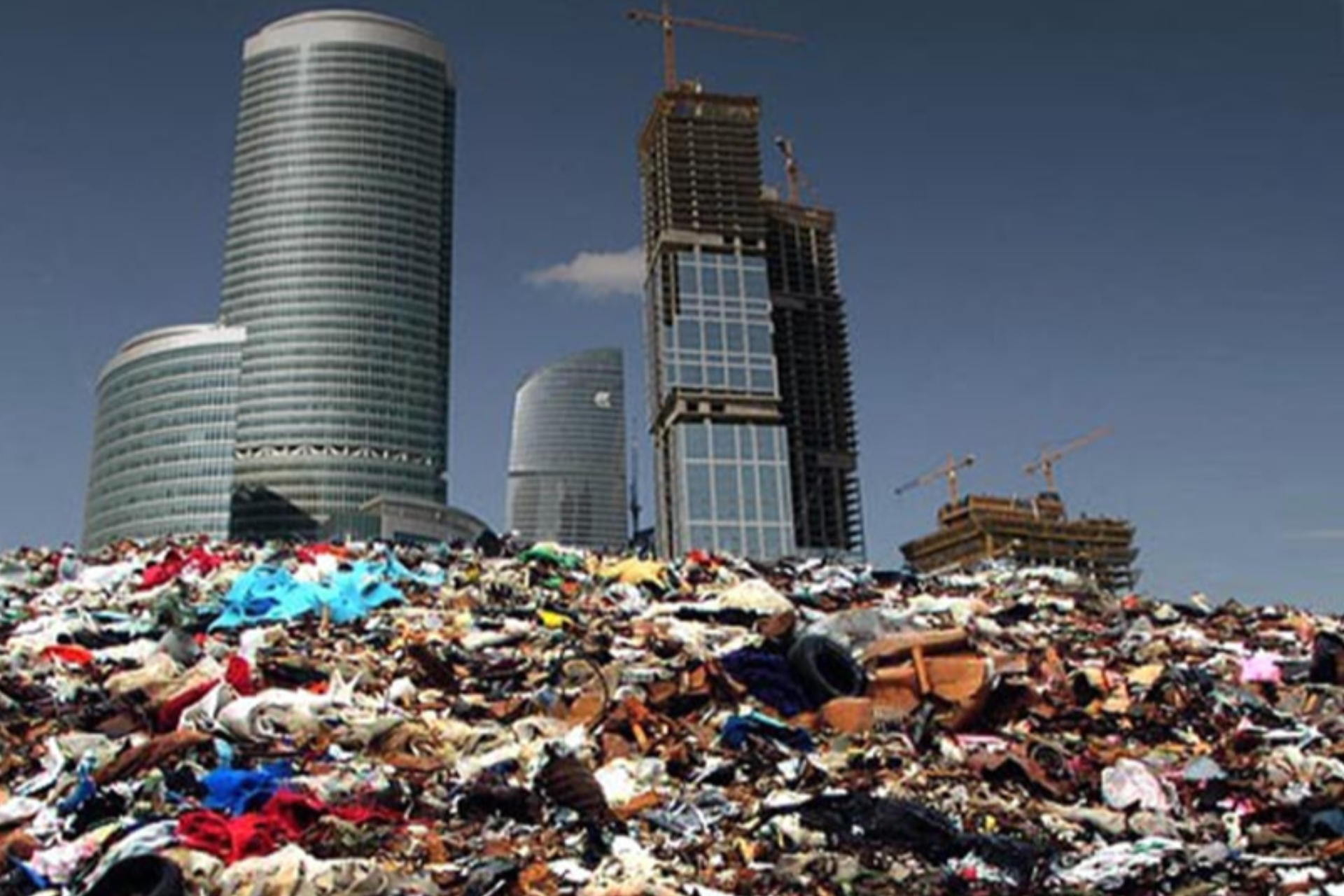
Globally, approximately $25 \cdot 10^9\text{ tons}$ of waste are generated annually. This is largely due to the fact that today, 60 chemical elements and dozens of types of natural mineral resources are used worldwide for various industrial, defense, domestic, scientific, and other purposes. In advanced countries (USA, Japan, Germany, etc.), per capita consumption of mineral resources ranges from 15 to 20 tons per year, while the global average has reached 8 tons per year per person—more than quadrupling over the past century.
WHEN
WILL THE WASTE PROBLEM IN JIZZAKH BE SOLVED?
Globally, approximately $25 \cdot 10^9\text{ tons}$
of waste are generated annually. This is largely due to the fact that today, 60
chemical elements and dozens of types of natural mineral resources are used
worldwide for various industrial, defense, domestic, scientific, and other
purposes. In advanced countries (USA, Japan, Germany, etc.),
per capita consumption of mineral resources ranges from 15 to 20 tons per year,
while the global average has reached 8 tons per year per person—more than
quadrupling over the past century.
In Uzbekistan alone, there are 186 landfills containing
33.4 million tons of buried waste. Additionally, 566 unauthorized dump sites were
registered in 2016, where approximately 15.3 thousand tons of various wastes
are dumped daily. To address this issue, President Shavkat Mirziyoyev
signed a resolution on April 21, "On measures for the radical improvement
and development of the waste management system for 2017–2021". The document is aimed at resolving issues related to
solid domestic waste collection and promoting private entrepreneurial activity
in this field. Measures are currently being taken to tackle the
waste problem in every region of the country. Specifically, in the Jizzakh region, located in the
central part of Uzbekistan, there are 10 waste landfills, but almost none of
them meet standard requirements. Renovation work has begun on 4 of them.
Khokimiyat of Jizzakh Region
The Jizzakh region is located in the central part of
Uzbekistan between the Syr Darya and Zeravshan rivers. The total area of the region is 20,500 km². The climate is continental and arid, with hot summers
and moderately cold winters. It borders the Republic of Kazakhstan and the
Syrdarya region to the north, the Republic of Tajikistan to the southeast, and
the Navoiy and Samarkand regions to the west. The region is divided into 12 administrative
districts (tumanns). Currently, more than 1,300,000 people reside in the
region.
— "Currently, in accordance with Cabinet of
Ministers Resolution No. 315, waste management issues should be handled by
specialized sanitary cleaning enterprises as well as municipal and district
landscaping departments," says Bunyod Egamov, head of the Land and Water
Resource Protection and Waste Control Inspection under the Jizzakh Regional
Department of the State Committee of the Republic of Uzbekistan for Ecology and
Environmental Protection. — "However, non-compliance with these
requirements—specifically the untimely removal of trash—has led to the
emergence of numerous illegal dumpsites across the cities and districts of the
region. To eliminate this issue, State Unitary Enterprises
'Toza Khudud' are being established pursuant to Presidential Decree No. 2916. They will be responsible for transporting solid
domestic waste from collection points to landfills and clearing septic tanks. Currently, 5 small enterprises for solid waste
recycling are registered in Jizzakh, but none of them are operational yet. There are no waste paper recycling plants in the
region. After collecting secondary paper waste from the
public, entrepreneurs transport it to Tashkent for processing. For now, only LLC 'Jizzakh Advantage Plus' is
operating, producing coal briquettes from coal powder. All chemical production waste is transported by JSC
'Jizzakhagrokimyo' to a specialized landfill located in the Egizbulak citizens'
assembly area in the Farish district. The 5-hectare landfill is located 6 kilometers away
from the nearest residential area, and reconstruction work is currently
underway there."
If we look at the composition of the solid municipal
waste delivered to the landfill, it consists of general household waste. Unfortunately, there are no facilities in the region
to recycle solid and electronic household waste. To resolve this pressing issue, the Khokim of Jizzakh
Region issued Decree No. 227 on May 6, 2017, based on the aforementioned Presidential
Decree, assigning the construction of a waste sorting and recycling plant to
LLC "Temurbek Elegant". According to the project, the plant will process
70,000 tons of solid domestic waste annually.
The project also plans for the acquisition of 49 units
of waste transport and disposal equipment, as well as 170 waste collection
containers. However, it remains unclear when construction of the
plant will actually begin. Currently, all garbage from the city of Jizzakh is
transported to and buried in a solid waste landfill located 24 kilometers
outside the city. Frequently, due to heat and other factors, the
garbage at the landfill catches fire, sending foul-smelling smoke over
neighboring residential homes depending on the wind direction.
According to Abduvali Nurmatov, an employee of the
municipal landscaping department, waste at the landfill is not sorted.
Abduvali Nurmatov:
— "Our main
task is to keep the surroundings of the landfill clean and guide the vehicles
bringing waste here. Trash often catches fire due to the intense heat,
as well as hot coals brought along with waste from teahouses and eateries."
The production of building materials is the dominant
sector of industrial production in the region. There are also manufacturing facilities for plastic
products, cotton processing, and an operational fish processing plant. The region has a large number of mines extracting
polymetallic ores containing lead, zinc, and iron, as well as raw materials for
lime production and limestone. All of these generate significant amounts of waste.
Currently, there are 34 mahallas in the city of
Jizzakh, with a population of 168.2 thousand people. Approximately 80 tons of waste are removed from the
city daily, meaning every resident of Jizzakh generates about 1.2 kg of trash
per day. Waste collection is managed by two entities: LLC
"Mahsus-service" and the Jizzakh Municipal Landscaping Department. However, despite the existing competition, delayed
garbage removal in residential sectors and plastic bags left along local
neighborhood roads continue to spoil the city's updated appearance.
— "We have signed agreements with 20 mahallas in
our city, while LLC 'Mahsus-service' handles 14 mahallas for waste
collection," says Bahodir Otajonov, head of the municipal landscaping
department. — "Garbage trucks signal their arrival in the
morning. All waste is buried at the solid waste landfill
using bulldozers. A total of only 34 containers have been installed
across all mahallas in Jizzakh, and letters warning residents to keep their
neighborhoods clean have been sent to local mahalla committee chairpersons. Despite all measures taken, there are still
instances where citizens dump garbage before reaching the containers or leave
bags on roadsides and near residential building entrances. To eliminate these unpleasant cases, we regularly
conduct educational awareness work with the population."
Despite these efforts, waste is still not removed on
time in some of the city's mahallas. Residents do not care whether a mahalla belongs to
the Landscaping Department or LLC "Mahsus-service"; they only care
about one question: when will the garbage disposal issue finally be solved?
According to Lenure Adilshaeva, a resident of the
"Navoi" mahalla in Jizzakh, garbage trucks often arrive when most of
the neighborhood's residents are already at work. Therefore, only retirees or unemployed residents
staying at home manage to take out their accumulated trash. But what if everyone in a household works? What
should they do then? "We have brought up this issue with the
municipal landscaping department several times, but it remains
unresolved," says L. Adilshaeva.
— "A lot of waste accumulates in our mahalla
during the day," says Rano Abdullaeva, a resident of the
"Navruz" mahalla. — "Specialized vehicles collect all the garbage
in the morning, but despite this, many people throw their trash in prohibited
areas at night. Our city has transformed and become beautiful over
the last two years. The Landscaping Department planted flowers everywhere. However, our citizens do not help responsible
officials maintain this beauty, clean the city, or water the flowers. After all, all of this is done for us and our
children. All this shows that our citizens lack ecological
culture."
Everyone knows that waste pollutes the environment and
serves as a vector for various infectious diseases. As of January 16, 2017, there are only 293 waste
collection sites and 554 waste containers in the entire region. For the Jizzakh region, which has a population of
over 1.3 million people, this is grossly insufficient. According to data from the Jizzakh Regional
Department of the State Center for Sanitary and Epidemiological Control, the
region requires an additional 2,255 collection sites and 889 containers. This would help keep district centers and
residential areas clean, as well as prevent diseases associated with waste
accumulation.
— "In accordance with a 2013 resolution of the
Cabinet of Ministers of the Republic of Uzbekistan, every waste collection site
must be maintained in compliance with sanitary standards. But we often observe a different picture—trash being
thrown into irrigation ditches (aryks) and along roads. This is unpleasant to look at and dangerous to
health," says Tal'at Boboev, head of the Sanitation and Hygiene Department
at the Jizzakh Regional Center for Sanitary and Epidemiological Control. — "Because waste contains many pathogenic
microbes that cause various diseases, primarily spread by flies. In addition, stagnated waste emits foul odors and
can cause respiratory diseases. While waste is not the source of all infectious
diseases, it triggers one of the most dangerous—hepatitis. Children playing near dump sites often grab food,
bread, or fruit without washing their hands. Therefore, especially during the summer, our
Center's staff conduct educational work in mahallas and educational institutions. We have established a control group that visits
homes and checks the condition of sanitation facilities. Furthermore, our center's main responsibility is to
monitor the sanitary-hygiene status of public catering establishments through
laboratory testing."
Another major problem in the Jizzakh region is the
lack of wastewater treatment facilities. Across the entire region, which comprises 12
districts and 1 city of regional subordination, having only one operational
wastewater treatment plant is clearly insufficient. Unfortunately, even this facility requires major
repairs. In some areas, untreated sewage is discharged
directly into nature, exacerbating the environmental crisis.
— "Districts have bio-basins where
primary-treated wastewater is dumped," continues Tal'at Boboev. — "There are several industrial enterprises in
the Jizzakh region that discharge chemical waste. Each enterprise has a primary treatment facility. Another issue is that residents collect empty
plastic bottles thrown in the trash and reuse them as containers to sell milk
and dairy products."
Naturally, primary treatment alone cannot solve the
problem; wastewater must undergo several purification stages to become
completely harmless to the environment.
Today, the city of Jizzakh has turned into a massive
construction site. New housing complexes are being built and areas are
being landscaped. Yet, walking through the city, neither in the center
nor on the outskirts did we see a single public trash bin.
— "Work is currently underway to install trash
bins in public places and organize sorting systems," says Bahodir Otajonov. — "We are currently negotiating their
procurement."
The public's environmental culture is shaped by
efforts carried out in this direction. Not many city residents will carry candy wrappers,
ice cream wrappers, sunflower seed shells, or cigarette butts in their pockets
or bags just to dispose of them in a proper bin. Today, all this litter can be seen in ditches, on
sidewalks, and across lawns. The absence of trash bins throughout the city—not to
mention district centers and villages—leads to the disregard of the hard work
done by landscaping staff.
In the region, the issue of collecting and disposing
of solid domestic and electronic waste is becoming more urgent by the day. The Khokimiyat of Jizzakh Region faces a difficult
challenge: there is an urgent need to build mini-recycling plants, wastewater
treatment facilities, install public trash bins, and purchase additional waste
containers. Resolving this issue will not only safeguard public
health but also preserve Jizzakh's unique nature, which has a
thousands-year-old history.
Nargis QOSIMOVA