

Waste Management and Environmental Initiatives Discussed at the Public Council Meeting
A regular meeting of the Public Council under the National Committee on Ecology and Climate Change was held at the Agency for Waste Management and Circular Economy Development. During the meeting, participants reviewed the Agency’s performance, discussed measures to improve the waste management system, advance circular economy principles, and presented several initiatives aimed at raising environmental awareness and encouraging greater public participation in addressing environmental challenges.
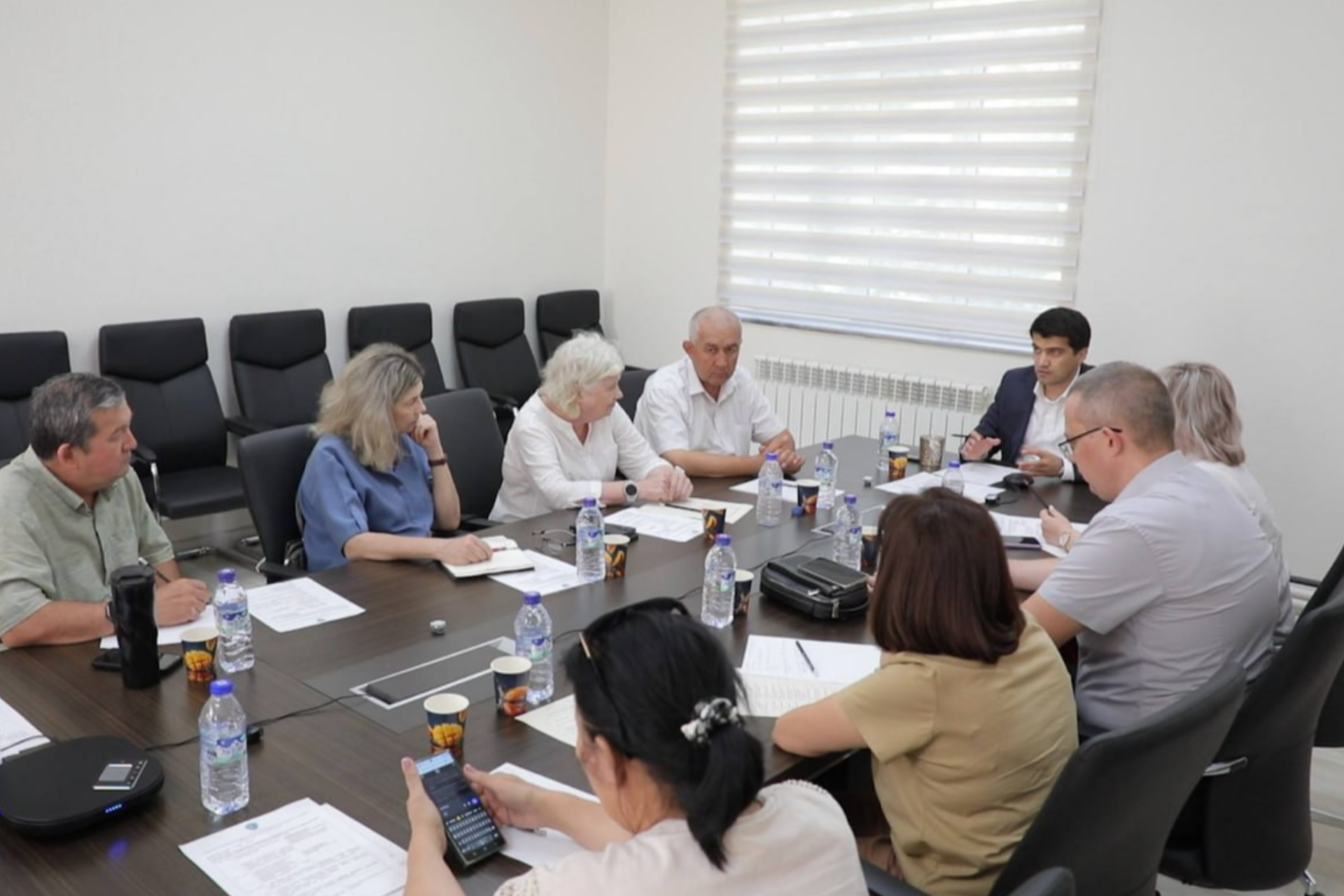
Sharifbek Hasanov, Director of the Agency for Waste Management and Circular Economy Development, delivered a report on the Agency’s activities. He provided detailed information on the results achieved during the first half of 2026 and outlined the priority areas for the sector’s further development.
According to the report, 15 regulatory and legal documents were adopted during the reporting period to improve waste management, strengthen public-private partnerships, and attract investment. These measures are intended to reinforce the sector’s legal framework, create favorable conditions for investors, and improve the quality of services provided to the population.
Particular attention was given to the expansion of sanitation and waste collection services, with coverage increasing from 80 percent to 90 percent of the population. This achievement reflects significant progress in improving waste collection and disposal services across thousands of communities throughout the country. Efforts to digitalize the sector are also ongoing, with modern monitoring systems being introduced to enhance oversight of waste management processes and service delivery.
The meeting also addressed the expansion of waste recycling capacities. Participants noted that new recycling facilities are being established in various regions, existing production capacities are being modernized, and projects aimed at transforming waste into valuable economic resources are being implemented in stages. In addition, large-scale investment projects focused on generating electricity from municipal waste continue to move forward.
Council members discussed key priorities planned through the end of 2026. These include the adoption of a new version of the Law “On Waste,” the development of the National Strategy for Sanitation and Circular Economy Development for 2026–2030, and the launch of the “Waste-Free Uzbekistan” initiative.
Representatives of the sector also provided updates on efforts to expand infrastructure for separate waste collection, increase the number of recycling enterprises, and fully digitalize processes related to household and construction waste. These measures are expected to reduce waste volumes, promote the efficient use of natural resources, and strengthen environmental safety.
A significant part of the meeting was devoted to the presentation of public environmental initiatives and projects. Among them was the project “Conservation of Reptiles of Uzbekistan through Education, Media, and Public Participation,” presented by the public association “Ekolog.”
During the presentation, it was noted that reptiles are often misunderstood by the public, leading to negative attitudes and, in some cases, threats to their survival. The project aims to raise awareness about the important role reptiles play in maintaining ecological balance and biodiversity, produce educational media content, organize awareness campaigns, and encourage citizens to participate in nature conservation activities.
Participants were also introduced to the “EcoMahalla” project developed by the Republican Ecological Resource Center “Ekomaktab.” The initiative seeks to promote environmental culture in local communities, introduce waste separation practices, strengthen environmental education, and support community-based environmental actions.
Another project presented at the meeting was “Clean Mahalla – Sustainable Society,” implemented by the non-governmental organization “Ecology of the Soul.” The project focuses on organizing environmental campaigns in cooperation with local communities, educational institutions, and public organizations, while also promoting volunteerism and increasing environmental responsibility among young people and the broader public.
During the discussions, members of the Public Council exchanged views and offered recommendations for improving the presented initiatives. Particular emphasis was placed on strengthening environmental education, expanding cooperation with civil society institutions, and encouraging broader public engagement in addressing environmental issues.
Concluding the meeting, participants emphasized the importance of uniting the efforts of government agencies, civil society organizations, the scientific community, businesses, and the general public to effectively address environmental challenges, improve the waste management system, and advance the circular economy in Uzbekistan. They noted that supporting environmental initiatives and ensuring their practical implementation are essential for protecting the environment and creating a sustainable future for coming generations.