

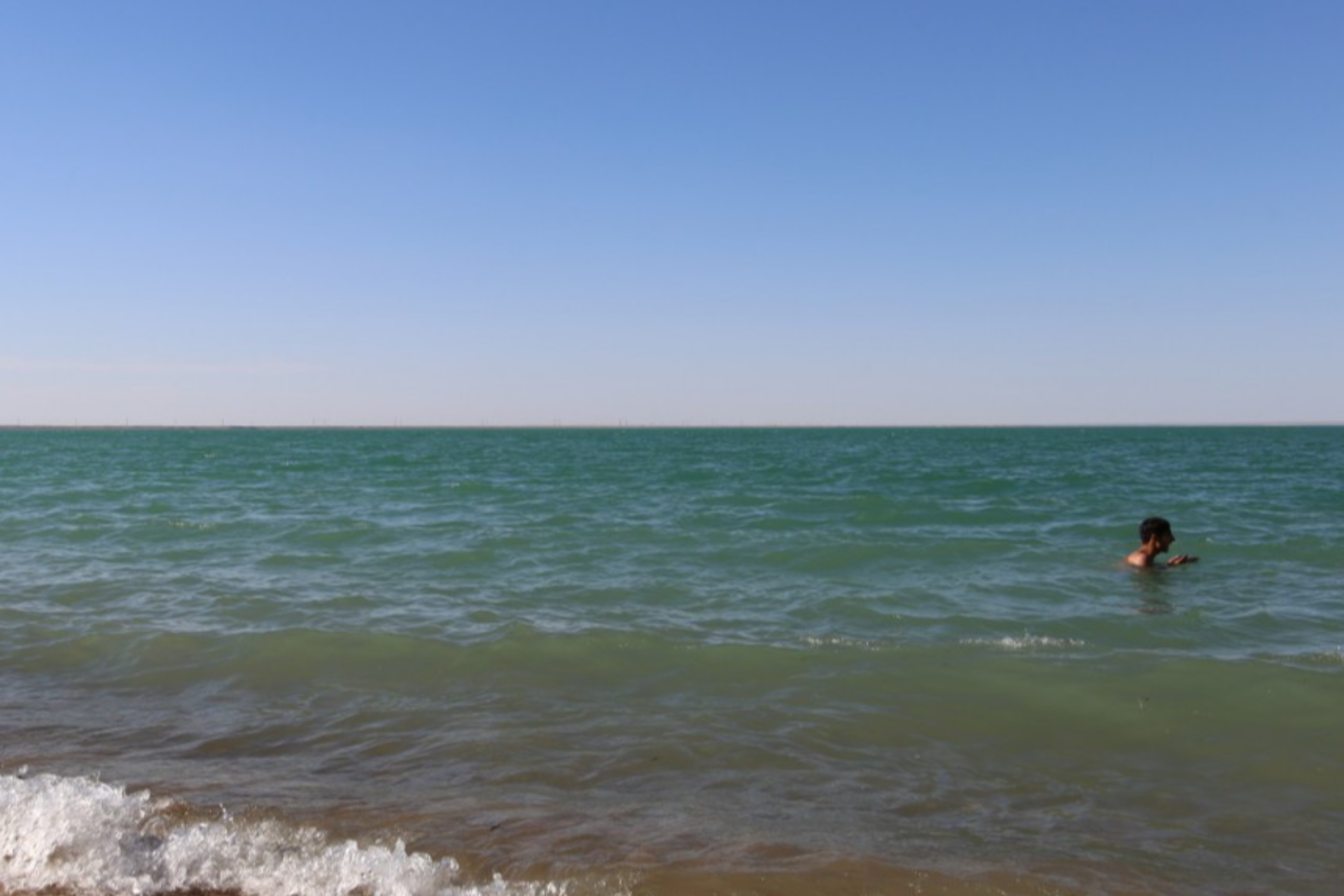
A recent incident near the Tudakul Reservoir in Navoi Region has raised an important public question: who has the right to use the reservoir and its surrounding shoreline areas, and is it legal to demand payment from citizens simply for passing through an area to reach the water?
According to eyewitnesses, when a group of citizens was heading toward the reservoir, a man approached them and demanded payment for passing through the territory.
— “You are passing through my territory, so you have to pay,” he reportedly said.

The citizens asked him to provide documents confirming his ownership or legal right to use the territory, explain on what basis the land had been allocated to him, and clarify its legal status.
Instead of providing documentation, however, the confrontation continued with raised voices.
What is particularly noteworthy is that there were no clearly visible signs at the site indicating that the area was private, identifying its owner, or specifying the rules governing access. On the contrary, the territory appeared to be littered with waste.
According to the citizens, they did not stay at the site for recreation, swim there, or use any paid services. They simply passed through the area toward the reservoir and took photographs along the shoreline.

Therefore, this incident should not be viewed merely as a personal dispute. It should also be examined from the perspective of the legal status of water bodies and shoreline areas.
Water is a national resource
The Water Code of the Republic of Uzbekistan, adopted on July 30, 2025, establishes important legal principles governing the use and protection of water resources.
Under the Code, water is a national resource, and the rational use and protection of water resources are guaranteed by the state.
This means that the use of water bodies must take into account not only economic interests but also the public interest.
The Water Code also provides for general water use. This includes the use of water by citizens for certain purposes under the general procedure, including swimming, sports activities and recreational use.
This raises an important question: if the law provides for general public use of water, how should citizens' access to the water body itself be ensured?
Can the right to use a water resource be guaranteed by law while access routes to that water are effectively blocked?
Shoreline areas also have a specific legal status
Another important issue concerns shoreline areas.
The water body itself and the land located alongside it may have different legal statuses. A particular land plot may indeed have been legally leased or otherwise granted to a business entity.
However, the mere fact that a land plot has been granted to an entrepreneur does not automatically give that entrepreneur the right to block areas intended for public use, restrict citizens' lawful rights, or impose arbitrary charges for access.
Therefore, in each individual case, it is necessary to establish the type of land-use right, the boundaries of the land plot, cadastral documents, and the legal basis for its lease or other form of use.

If the territory has actually been legally allocated to a business, there must be a corresponding legal basis.
But a verbal statement such as “This is my territory” is not, by itself, proof of a legal right to the land.
Payment for a service is not the same as payment for passage
A business entity may legally operate a recreational facility and provide certain services on a paid basis.
For example, charges may apply for the use of sun loungers, showers, food services, sports facilities, parking, or other infrastructure.
However, demanding money from a citizen who has not used any service and has merely passed through the territory requires a separate legal justification.
This is one of the key questions arising from the Tudakul incident:
Why exactly were citizens asked to pay?
What service was the payment supposedly for?
Where is the applicable tariff displayed?
On what legal basis is access to or passage through the territory restricted?
Is there an alternative public access route to the reservoir?
These questions require an official response.
A “Private Territory” sign is not enough
In practice, signs such as “Private Territory,” “No Entry,” or “Paid Access Only” can sometimes be found near bodies of water.
However, the existence of such a sign alone does not determine the legal status of the territory.
The legal status of a land plot must be established through cadastral records, decisions allocating the land, lease agreements and other relevant legal documents.
Therefore, the first step in assessing the situation around the Tudakul Reservoir should be to examine the relevant documents.
Another problem — the environmental condition
There is another serious issue: the sanitary and environmental condition of the area.
If the territory is intended for public recreation, the presence of accumulated waste raises legitimate concerns.
Earning income from business activities also comes with responsibilities related to environmental protection, proper waste management, sanitation and maintenance of the territory.
If people are being charged for recreational services while the area itself is heavily littered, this issue should also be investigated by the competent authorities.
The Tudakul case reflects a broader problem
The incident at Tudakul raises an issue that goes beyond a dispute with one individual.
Around Aydarkul, Charvak, Tudakul and other water bodies, questions about public access to natural areas, open shorelines and public recreation zones are becoming increasingly important.

How many legal, open, safe, clean and properly maintained recreational areas are actually available to ordinary citizens?
Which shorelines are open for public use?
Which territories have been legally allocated to businesses?
Where exactly is the boundary between a private recreational facility and an area intended for public use?
And most importantly: must an ordinary citizen pay every time simply to reach the water?
These questions are relevant not only to Navoi Region. They point to the need for a broader legal assessment of access and land-use practices around water bodies throughout Uzbekistan.
Official clarification is needed
We therefore call on the competent authorities to examine the situation around the relevant territory of the Tudakul Reservoir and provide the public with clear and transparent information.
In particular, it is important to establish:
— to whom and on what legal basis the land plot was allocated;
— what its cadastral boundaries are;
— what type of land-use right exists and how long it is valid;
— what type of business activity is legally permitted on the territory;
— whether there is a legal basis for charging citizens simply for passing through the area;
— how citizens' right to general use of the water body and shoreline is ensured;
— what the sanitary and environmental condition of the territory is;
— whether open and safe access routes to the shoreline are available to the public.
Water does not belong only to those who can afford to pay
Entrepreneurship must be supported. Private investment and modern recreational facilities are also necessary.
But there must be a legal balance between the rights of businesses and the public interest.

Water is a national resource.
A shoreline is not merely a source of commercial income. It is also a place where people can enjoy and interact with nature.
That is why the situation at Tudakul raises a fundamental question:
Where does the personal claim “This is my territory!” end, and where does a citizen's lawful right begin?
This question should be answered not with shouting or intimidation, but with the law and official documents.
Nargis Kosimova