

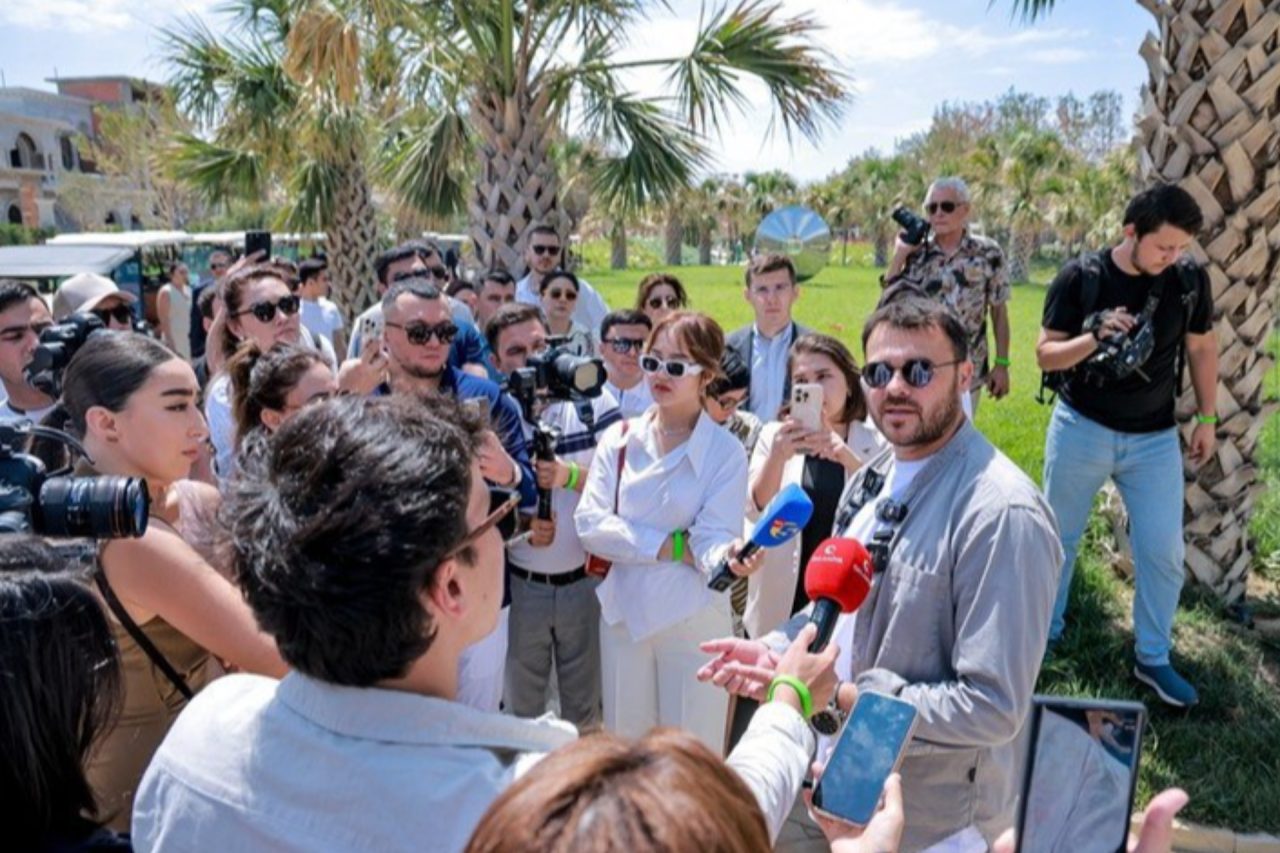
The Sea Breeze Uzbekistan project, which is being implemented in Uzbekistan to develop the tourism sector, is causing widespread public discussion. According to the project, the construction of a modern resort complex on the shores of Lake Charvak and subsequent large investments are envisaged. The public is concerned that this construction will not only bring economic benefits, but also pose a risk of negative environmental impacts. At the initiative of the Ministry of Ecology, Environmental Protection and Climate Change, a visit to Azerbaijan was organized for representatives of a number of Uzbek media outlets. As part of the trip, the journalists got acquainted with the activities of the Sea Breeze Resort resort complex, located near Baku and owned by businessman Emin Agalarov. The main purpose of the visit was to study the ecological approaches, infrastructure and experience of this complex in reducing environmental impact and compare it with the Sea Breeze Uzbekistan project, which is planned to be implemented in Uzbekistan.
Emin Agalarov: Charvak is already in danger
 The founder of the project, Emin Agalarov, in an interview with journalists, noted that Charvak is already under ecological danger today. The water quality there is deteriorating every year. He said that the reasons for this situation are the lack of a wastewater collection system, the inefficiency of existing structures and the instability of construction, and that they have discussed this issue with Uzbek ecologists.
- For this reason, I would like to propose the construction of a common collector throughout Charvak. Such a practice has been successfully implemented in Baku. In Uzbekistan, all construction within the framework of the project will be carried out in accordance with environmental standards. An advisory council consisting of international ecologists will also be formed. Before construction, an environmental examination, agreements with state bodies and public hearings will be organized. After all, it is impossible to implement this project without complying with environmental standards - this is not only a matter of business, but also a matter of personal responsibility. The Sea Breeze Uzbekistan project does not deny the preservation of natural areas, but, on the contrary, aims to improve them. In addition to the five types of trees in their current natural state, dozens of new plants and shrubs suitable for the local climate will be introduced by landscape designers and biologists, said E. Agalarov.
Touching upon the problems related to waste, the initiator emphasized that he would keep this issue under special control:
-Construction waste will be collected and disposed of through special companies. Smart technologies and solar panels will be widely introduced in construction. In the first stage, 45 buildings will be equipped with solar panels. All houses in the town will be connected to a "smart" management system. The project is based on the principle of a "self-sufficient green city" - schools, hospitals, kindergartens, recreation areas and workplaces will be located in one area. This area is intended for permanent, not seasonal, residence. Currently, 7 thousand permanent workers and about 15 thousand service personnel are directly employed at the Sea Breeze project in Azerbaijan. 1,000 of them are local residents and people who have historically lived in this area. New jobs, the development of the local economy and an increase in the flow of tourists are also envisaged in Charvak.
One of the main questions in the public is the concern about “will the beaches be privatized?” As Emin Agalarov emphasizes, “the beaches will be open and public. Both paid and free beaches in Baku Sea Breeze will provide the same level of service, and the same will be true in Charvak. The 5-kilometer project area is only a few percent of the entire Charvak coast. The total cost of the project is estimated at about $ 10 billion. At the initial stage, 300 thousand sq. m of construction is planned, and $ 400-450 million will be spent on it. The profit margin is expected to be around 30%. In addition, a significant part of the profit from real estate sold within the framework of the project per year is being spent on ecology, infrastructure and public facilities.
Environmental risks of the Sea Breeze Uzbekistan project
Currently, the Charvak region is located within the Ugam-Chatkal National Nature Park. The forest and mountain landscapes surrounding Charvak are a key part of the region's ecosystem. As noted in an article published in The Guardian in 2023, construction in the Aral Sea region has reduced natural land by up to 20%, which has led to a decrease in soil moisture and an increase in dust storms. The same process can be reversed in Charvak. First of all, felling trees for construction leads to a loss of habitat for birds, mammals and insects.
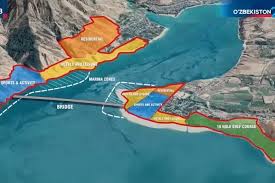 New seedlings will not be able to replace the natural forest for several decades. In addition, the Charvak reservoir is one of the main water reserves of the Tashkent region, as well as a habitat for various fish species (sardines, bream, etc.). Excavation, cement, oil products, waste flows during construction have a negative impact on the oxygen content in the water. An analytical article published on the official website of the Ecological Movement of Uzbekistan in 2022 noted that increased tourism activity around water bodies has led to an increase in the content of phosphates in the water, a decrease in fish populations, and excessive growth of aquatic plants. However, Emin Agalarov assured journalists that the level of water pollution during and after construction was examined and that the water would be much cleaner than before as a result of the environmental measures taken.
The Charvak mountain ranges and lake shores serve as resting points for migratory birds. Construction work and increased tourist traffic may disrupt bird breeding and nesting due to noise, light pollution, and traffic.
There is no centralized sewage system in Charvak. If a sufficient treatment system is not built for a complex of this scale, biological pollution of the water (bacteria, viruses, an increase in nitrogen and phosphate substances) will occur. Agalarov, who specifically addressed this problem, said that "the government is ready to build a sewage system if the project is implemented."
Mechanical intervention during construction, equipment movement, asphalt laying, and road widening work cause soil damage and increased water erosion. This leads to the deposition of mechanical particles on the lake bed and an increase in water turbidity.
What does the Minister of Ecology, Environmental Protection and Climate Change, Aziz Abduhakimov, say?
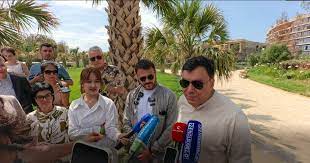
The Minister of Ecology, Environmental Protection and Climate Change of the Republic of Uzbekistan, Aziz Abduhakimov, made a number of important comments on the Sea Breeze Uzbekistan project in an interview with journalists. The Minister noted that special attention is paid to projects based on the principles of environmental sustainability in the country. An important criterion for Uzbekistan is the commitment of investors cooperating in the tourism sector to "Green Based Solutions" - that is, green approaches.
"The ministry, in turn, is ready to support any initiative that is implemented in compliance with environmental standards. The initiator of the Sea Breeze project expressed its readiness to follow the recommendations of international and local experts at all stages of construction," said Aziz Abduhakimov.
The Minister also stressed the need to obtain an opinion from international experts on the possible impact on water resources, environmental risks and mechanisms for their elimination before the project is implemented. The issue of construction waste was also not ignored:
"All waste will be collected centrally and recycled in accordance with recycling and disposal standards," the minister said.
The project is important in terms of national interests
The minister noted that this project is intended not only for foreign tourists, but also for citizens of Uzbekistan. According to him, today our compatriots spend about $ 2 billion a year on vacation abroad. If a high-quality tourism infrastructure is formed within the country, these funds can remain in the country and serve the domestic economy.
"If this project is implemented, people will spend their money on vacation in Uzbekistan, not abroad. This will create a sustainable and diversified form of tourism in our country," he said.
The principle of popularity
The minister also addressed concerns among the public that "the project will be for the rich, ordinary people will not be able to go":
"For any project to be economically sustainable, it must have paying customers. However, this does not mean that it will be only for the rich. The mass tourism sector is also being considered. A popular segment will be created where both teachers and doctors or medical workers can come and relax. A project built only for the elite will not bring profit. Life should be bustling here, so economic and social balance is maintained."
The minister also noted that the natural environment could be better protected by building one large, centralized, and controlled complex in the area, instead of scattered construction projects.
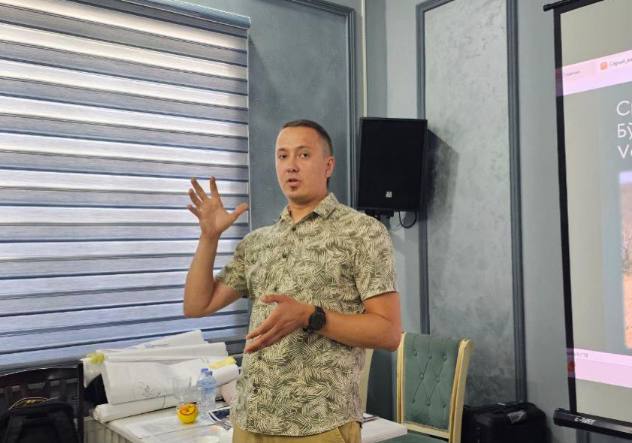 According to Timur Abduraupov, a junior research fellow at the Institute of Zoology of the Academy of Sciences of the Republic of Uzbekistan, herpetologist, the construction site is home to endemic lizards and other reptiles and amphibians. Construction will increase the risk of extinction of these species. For this, it is necessary to preserve small natural zones in the construction area.
The Sea Breeze Uzbekistan project is certainly an investment opportunity. However, in its implementation:
It is necessary to conduct an independent environmental assessment, develop engineering solutions based on international standards for the safety of trees, fish, birds, soil, and water, and ensure public oversight.
After all, economic development should not come at the expense of nature.
Nargis Kasimova