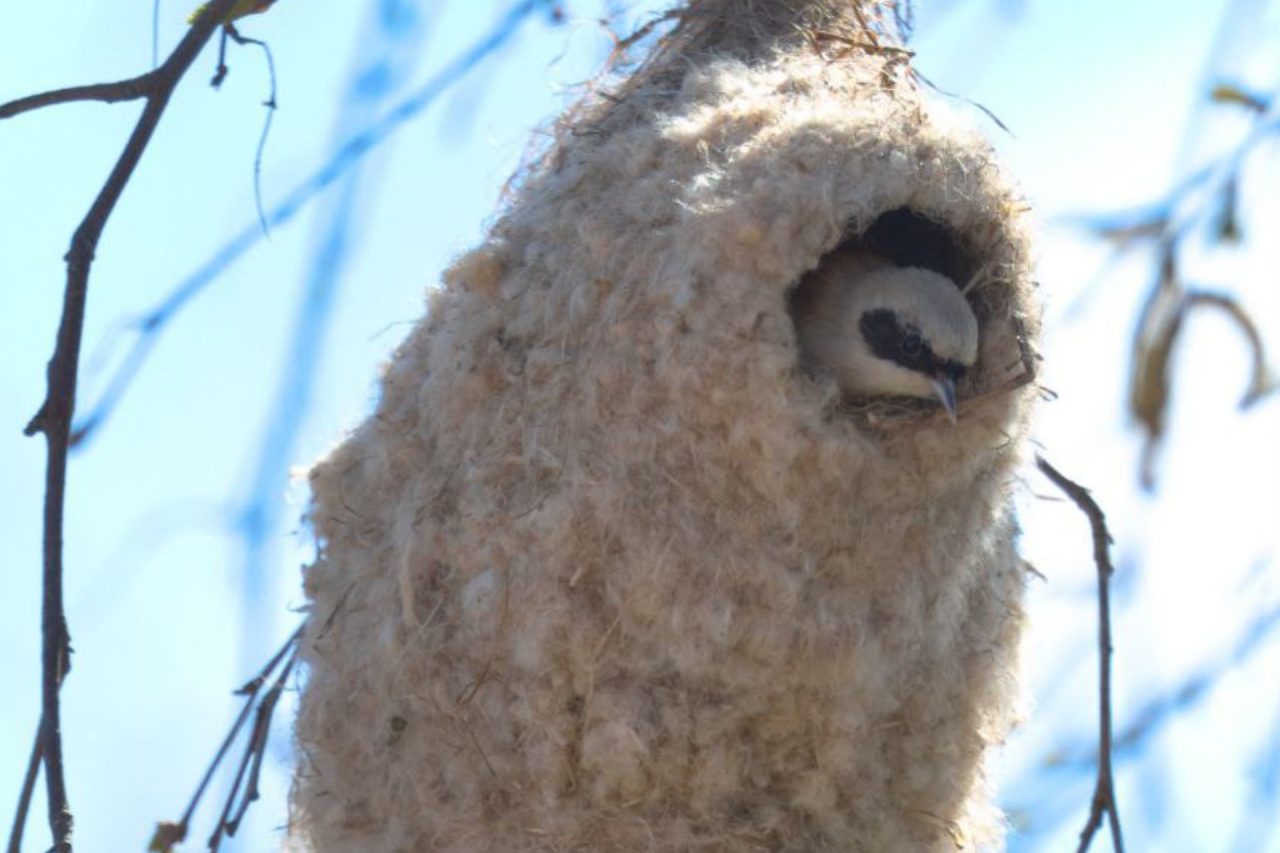
The nest in the photo belongs to the Eurasian Penduline Tit (Remiz pendulinus), one of nature's most remarkable architects.
Using soft plant fibers, seed fluff, animal wool, and other natural materials, this tiny bird carefully weaves a warm, pouch-shaped nest that hangs securely from a thin tree branch. A small side entrance helps protect the eggs and chicks from predators and harsh weather.
🌿 Did you know?
🔹 It takes the penduline tit 2–3 weeks to build a single nest.
🔹 The nest is exceptionally strong and well-insulated, protecting the chicks from wind, rain, and sudden temperature changes.
🔹 These birds are commonly found in tugai forests, as well as along rivers, lakes, and wetlands where willows, poplars, and reeds grow.
🔹 Penduline tits feed mainly on insects, helping to naturally control pest populations and maintain ecological balance.
💚 These remarkable nests remind us how extraordinary wildlife can be. Protecting tugai forests means protecting the unique species that depend on them.
📸 Have you ever seen a nest like this in the wild? Share your experience in the comments!.


Biodiversity|3988
In tugai forests, you may come across these unusual hanging nests. But do you know who builds them?
The nest in the photo belongs to the Eurasian Penduline Tit (Remiz pendulinus), one of nature's most remarkable architects.