

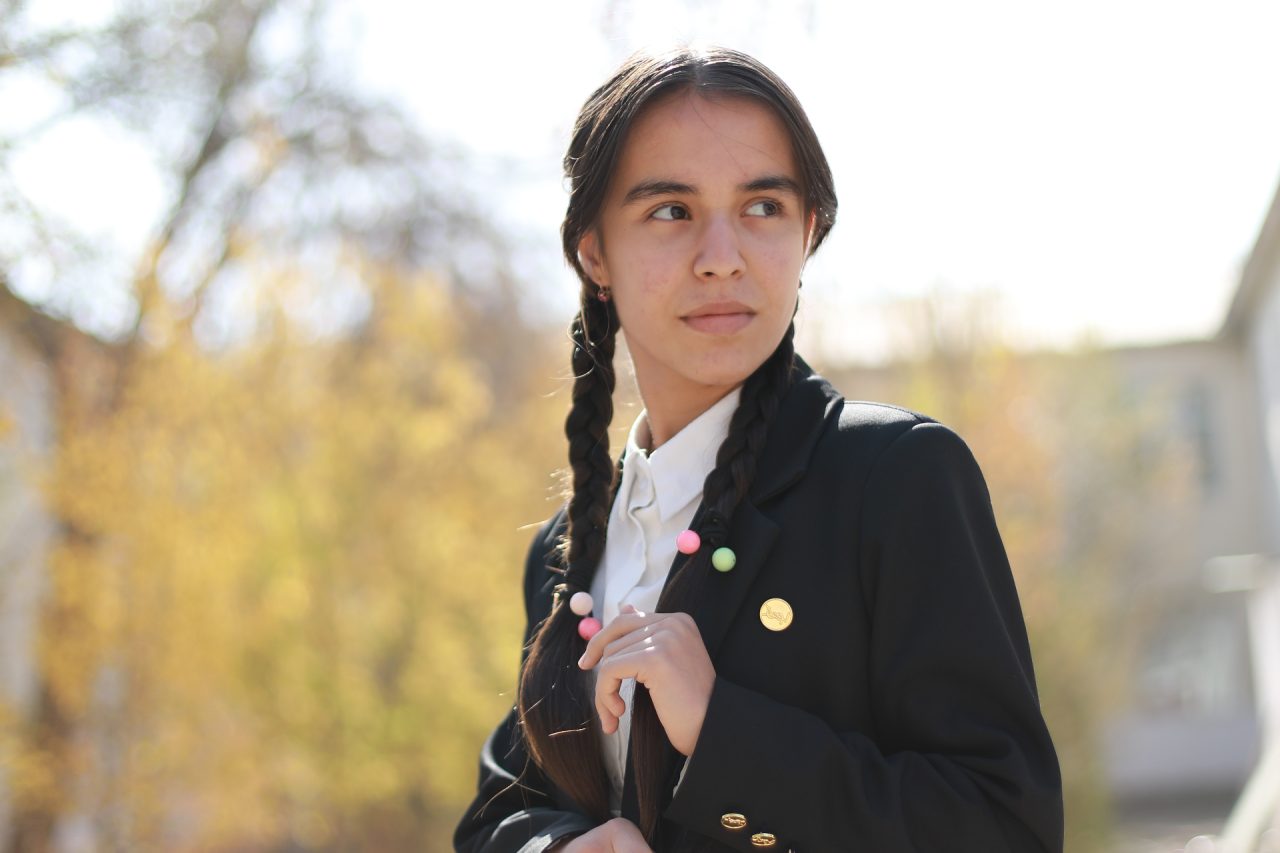
In May 2025, students of the 39th and 41st schools in Jambaskala participated in an environmental awareness program organized jointly by the World Aral Region Fund, the Ekolog.uz portal, and the Ecological Movement of Uzbekistan. Students living on the border of desertification in the Aral region wrote essays and stories based on their personal experiences about climate change. In this text, the tragedy of the Aral is revealed through the sincere words of Marufa.
Once upon a time, the waves of the Amu Darya not only gave life to the land but also instilled hope in the hearts of people. Life was bustling on the shores of the Aral: fishermen met the dawn with prayer, children played happily, and ships cruised the water expanses. For us, the Aral was not just a body of water, but a source of life itself.
According to data, until the 1960s, the Aral was considered the fourth largest lake in the world: its area was 68,000 square kilometers, and its water volume was 1,064 cubic kilometers. However, starting from the 1960s, as a result of the massive diversion of the Amu Darya and Syr Darya waters to cotton and other agricultural fields, the sea began to dry up.
Today, the Aral has turned into a desert covered with sand. In place of waves — storms, in place of fishermen — silence. The disappearance of the sea dried up not only the lives of fishermen but also the dreams of thousands of people. This tragedy brought an increase in diseases, caused damage to nature and people, and led to the salinization of lands and their transformation into a desert. All this reminds us how important it is to value water and protect nature.
We can bring back the Aral, there is hope. If we act together, the sea will roar again, and life will be reborn. Do not lose faith — after all, we can only save the Aral with our own hands.
Marufa Aytbayeva