

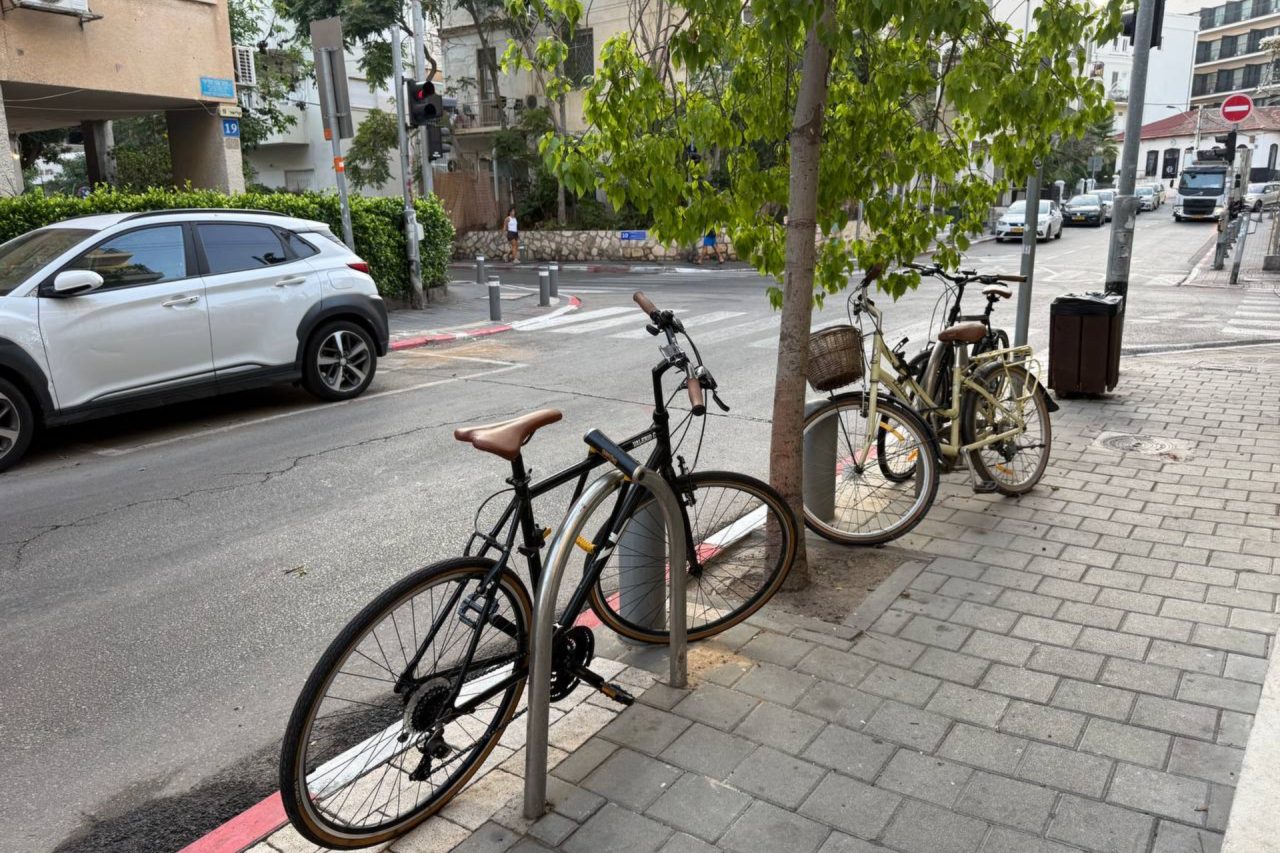
This is not simply a matter of residents’ habits. It is the result of a transport policy and infrastructure system that has been developed in the city over many years.
Tel Aviv’s geographical characteristics also create favourable conditions for cycling. The city is largely flat, and distances between different areas are relatively short. As a result, travelling by bicycle is physically convenient. However, one of the most important reasons for the large number of bicycles is the availability of dedicated infrastructure.
In recent years, the Tel Aviv Municipality has placed significant emphasis on expanding bicycle lanes and connecting them with the city’s main streets, residential areas and major transport hubs. Dedicated cycling paths, special crossings at intersections, bicycle parking facilities and other amenities have been created for cyclists. As a result, the bicycle has evolved from being simply a means of sport or recreation into a practical mode of everyday transportation.
During my trip, I walked through the streets of Tel Aviv and spoke with several residents, learning some interesting information for myself. One of the people I spoke with told me that in Tel Aviv, you do not necessarily have to own a bicycle. When I asked, “Why?”, he replied:
— You know, the main advantage of using bicycles here is the infrastructure and the well-developed bicycle rental system. It is very well organised. People take traffic rules very seriously and follow them strictly. Tel Aviv has a bicycle rental system called “Tel-O-Fun”. You can find more than 175 green “Tel-O-Fun” stations across the city. People can take a bicycle from one station and return it to another. Both regular and electric bicycles are available. Bicycles can be rented for one day, three days, one week or one year. In other words, people can cycle around the city without having to buy a bicycle. In addition, private companies also offer electric scooter and bicycle rental services, — Daniel, whom I spoke with, told me.
Although Daniel was in a hurry, I tried to get answers to a few more of my questions as quickly as possible.
Another form of transport widely used by people in the city is the electric scooter, which has become an important part of Tel Aviv’s transport system. They are mainly used for short journeys of around 1–5 kilometres. People do not have to wait for a bus or search for a parking space. As a result, electric scooters are a fast and practical way to get to work, university, a shop or another public transport stop.
Israel also has specific rules governing the use of electric bicycles and electric scooters. In particular, the minimum age for using these vehicles is 16. There are also speed restrictions, with a maximum speed of 25 km/h. The use of a protective helmet is also required.
Riding an electric scooter on the pavement is prohibited. In addition, a registration system for electric two-wheeled vehicles has been introduced. This means that such vehicles are not treated simply as informal means of transportation, but as a recognised form of transport regulated by law. Another important rule is that using a mobile phone while operating any vehicle is prohibited.
In the city’s transport policy, considerable attention is being paid to connecting different modes of transportation rather than following the model of “one car for every person”. This is certainly something worth recognising. Bicycles, electric scooters, walking infrastructure and public transport complement one another, creating a more convenient and flexible urban transport system.
Therefore, the large number of bicycles and electric scooters in Tel Aviv cannot be explained simply by saying, “People like bicycles.” Behind this phenomenon are urban planning, transport policy and investment in infrastructure. Dedicated bicycle lanes, bicycle rental systems, electric scooter services, public transport and pedestrian-friendly infrastructure have together created an alternative to car-dependent transportation in the city.
This experience is also important from an environmental perspective. Choosing a bicycle or electric scooter instead of a car for short-distance trips can help reduce traffic congestion, lower transport-related emissions and contribute to changes in urban mobility culture.
Of course, the widespread use of electric scooters and bicycles also creates certain challenges related to safety, regulation and sharing public space with pedestrians. However, Tel Aviv’s experience demonstrates that with appropriate infrastructure, clear rules and a well-developed culture of responsible mobility, small electric vehicles can become a viable alternative to cars in everyday urban life.
Feruzbek Sayfullayev