

A modern zoo is not simply a place where animals are locked in cages and displayed to visitors for money. Above all, it should provide enclosures that are as close as possible to the animals’ natural habitats, safe spaces where they can move freely, clean and regularly maintained water areas, professional veterinary care around the clock, and diets tailored to the biological needs of each species.
The most important principle is that every animal in a zoo should be able to live in conditions as close as possible to its natural environment, with its psychological and physiological needs fully met. In addition, such facilities should serve educational and scientific purposes: they should teach younger generations to respect nature and show compassion towards animals, while contributing to the conservation and breeding of rare species.
None of these conditions appear to exist in this zoo. Visitors are not provided with official tickets or electronic receipts. Instead, money is simply handed to a person at the entrance before visitors are allowed inside.
The condition of this place is enough to break the heart of any conscientious person.
The enclosures, some barely larger than storage rooms, look like genuine prison cells for animals. One cannot help but wonder: what terrible crime were these animals convicted of to deserve such a “punishment”?
Lions, wolves, foxes, and snakes are kept in such cramped and rusted cages that they are deprived even of the opportunity to turn around freely or take a few steps.
The king of beasts — the lion — is kept behind rusty, sharp metal bars, standing on a damp and dirty concrete floor, looking completely exhausted. There is no longer any sign of dignity, pride, or a desire to live in its eyes.
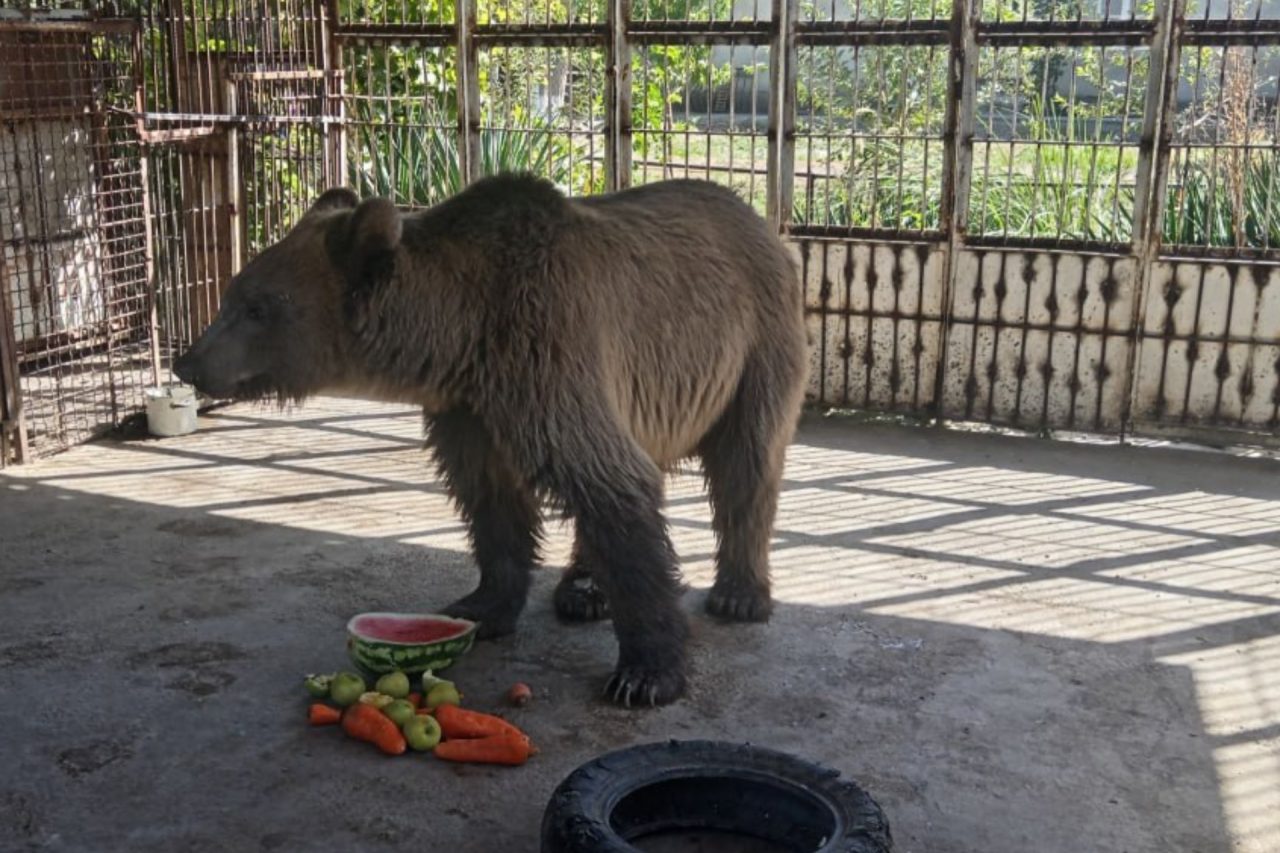
The area where the large bear is kept is no better. Inside a cramped cage-like enclosure, it walks aimlessly back and forth, giving the impression of an animal simply waiting for death.
The condition of the pool intended for waterfowl and aquatic animals is heartbreaking. Instead of clean, flowing and clear water, there is a stagnant, foul-smelling puddle that has become a potential breeding ground for bacteria.
Next to this filthy water stands a miserable stork with a damaged beak and feathers ruffled by dirt and cold. A guinea pig is kept in the same cage as rabbits. Because of the incompatibility of their behaviour and biological characteristics, conflicts occur between the animals: the rabbits viciously bite the guinea pig, leaving it injured. Yet the animal’s open wounds apparently receive no necessary veterinary treatment.
The sorrowful eyes of the monkeys clinging to rusty bars as if seeking help from visitors, and the feathers of parrots huddled against the cold and dirt, reveal one bitter truth: these animals are not living here — they are suffering and slowly wasting away every day, every hour.
There is another extremely dangerous and irresponsible aspect of this situation, directly related to public safety. The zoo is located in one of the busiest parts of the city, within a park that is constantly crowded with people and next to the central market.
Given that the enclosures are rusting and deteriorating and that the barriers appear to have been installed merely as a formality, the possibility that predators such as lions, wolves, or bears could escape cannot be ruled out. Keeping predatory animals under such conditions, in a crowded area and in violation of safety requirements, creates a serious threat to public safety and could potentially lead to a tragedy.
The international community, environmental organisations, and wildlife-protection organisations are increasingly calling for an end to the practice of keeping wild animals in captivity and artificial cages and for a transition towards more humane forms of conservation. Modern civilisation is increasingly recognising that depriving wild animals of their freedom and making them suffer behind bars for human entertainment or commercial gain is unacceptable.
Global experience shows that such cramped “prisons” are gradually being replaced by systems in which animals are protected in environments that are as close as possible to their natural habitats — in national parks, nature reserves, and spacious protected areas. Yet we continue to maintain such “living prisons” in the centre of the city, next to a busy market. This is completely inconsistent with modern principles of humanity and sustainable development.
The most troubling part is that the organisations and officials responsible for protecting nature and wildlife are effectively remaining mere observers. Those who should restore order and demand compliance with legal and sanitary requirements limit themselves to statements such as, “We conducted an inspection.”
The problem is then dismissed with statements such as: “This is a business entity; we cannot oppose it. The main thing is that the animals are not dying.” For them, apparently, it is considered acceptable for animals to suffer in cages, receive no veterinary care despite infected wounds, and survive by drinking water from filthy puddles.
Should an operation not be immediately stopped if it is being conducted at the expense of animals’ physical and psychological suffering, while also threatening public safety and violating sanitary standards? Should those responsible not be held accountable?
Therefore, the competent authorities and responsible officials must provide a legal assessment of this situation. Every animal suffering from injuries and psychological distress must receive qualified veterinary and rehabilitation assistance immediately. The animals should either be returned to their natural habitats or, at the very least, transferred to large reserves or zoos with proper living conditions and spacious enclosures that meet international standards.
If we consider ourselves a civilised and compassionate society, we must not silently watch these voiceless and defenceless creatures suffer.
Today, they have only one final plea to all of us:
“Give us freedom!”
Dildora IBROHIMOVA