

In rural areas, a significant proportion of daily household responsibilities—including collecting water, cooking, cleaning, washing clothes, caring for children, and supporting elderly family members—traditionally falls on women. When access to natural resources becomes limited, their physical and emotional workload increases. This can contribute to fatigue, psychological stress, economic hardship, and tensions within families.
In some cases, environmental and socioeconomic difficulties become additional factors that exacerbate existing gender inequalities and increase the risk of psychological, economic, and physical violence against women.
Against this background, examining the relationship between climate change, environmental challenges, and gender-based violence is particularly important.
Project Objectives and Key Activities
The Public Association "Ekolog" of the Republic of Uzbekistan, in partnership with the Civil Initiatives Support Center of the Republic of Karakalpakstan and the "Qalb Nuri" Center for Social and Legal Support for Women and Their Families in Jizzakh Region, implemented the project entitled "Reducing the Impact of Climate Change on Gender-Based Violence in Uzbekistan."
The project was implemented from 25 March to 31 July 2023.
Its main objective was to raise public awareness of the impact of environmental problems and climate change on gender-based violence and to develop practical recommendations for preventing such forms of violence.
The project focused on the following objectives:
Establishing cooperation with partner non-governmental organizations in Jizzakh Region and the Republic of Karakalpakstan.
Developing a questionnaire to identify the relationship between environmental problems and gender-based violence.
Conducting surveys among women and girls in the two regions, including women with disabilities.
Analyzing the survey findings and preparing a presentation of the research results.
Organizing roundtable discussions in Nukus and Jizzakh with representatives of government institutions, NGOs, law enforcement agencies, and the media.
Developing recommendations to prevent gender-based violence while taking environmental and climate-related factors into account.
Submitting the research findings and recommendations to relevant government institutions.
How Was the Research Conducted?
Between April and June 2023, surveys were conducted among women and girls in the Republic of Karakalpakstan and Jizzakh Region.
Particular attention was paid to involving women living in rural communities, where water shortages, soil salinization, declining agricultural productivity, and limited access to environmental infrastructure create significant challenges.
An important feature of the research was the inclusion of women and girls with disabilities. This made it possible to examine how environmental problems and climate change affect different social groups, particularly women facing multiple forms of vulnerability.
In the Republic of Karakalpakstan, 123 women and girls from 16 districts and the city of Nukus participated in the survey. Of these, 49 were women and girls with disabilities.
In Jizzakh Region, 170 women and girls from 12 districts and the city of Jizzakh took part. Among them, 36 were women with disabilities.
Thus, a total of 293 women and girls participated in the research, including 85 women with disabilities.
The questionnaire covered a wide range of issues, including water scarcity, air pollution, dust storms, rising temperatures, tree cutting, soil salinization, declining household income, and family relationships.
Participants were asked whether they had experienced insults, humiliation, threats, or physical violence associated with environmental problems. They were also asked how changes in their surrounding environment affected their daily lives and family relationships.
Key Findings of the Research
The survey results revealed that a significant proportion of respondents perceived a connection between environmental problems and domestic violence.
In the Republic of Karakalpakstan, 72% of respondents, while in Jizzakh Region, 87% of respondents, stated that climate change and environmental problems affect domestic violence.
These figures reflect the perceptions and experiences of the women who participated in the survey. They do not establish a direct causal relationship between climate change and domestic violence. However, they highlight the need to examine environmental factors as potential contributors to existing social and family tensions.
1. Water Scarcity and the Increasing Workload of Women
Water scarcity emerged as one of the most frequently reported environmental problems.
In Karakalpakstan, 64 respondents reported difficulties with washing clothes and maintaining personal hygiene due to insufficient water supplies. Another 33 women stated that they had to collect water from distant sources.
In Jizzakh Region, 53 respondents reported difficulties performing household chores because of water shortages, while 26 women said they had to carry water from far away.
This problem is particularly acute in rural communities, where the lack of reliable water supply increases women's daily workload.
The survey also identified cases in which women experienced insults, humiliation, and even physical violence because they were unable to collect water on time, wash clothes, or complete other household responsibilities.
These findings demonstrate that water scarcity is not merely an environmental or household issue. It can also reinforce gender inequality and increase psychological pressure on women.
2. Rising Temperatures and Family Conflicts
Another important area of the research was the impact of rising temperatures on people's psychological well-being and family relationships.
In Karakalpakstan, 39 respondents, and in Jizzakh Region, 51 respondents, stated that extreme summer heat and winter cold cause irritation and nervous tension among family members.
Furthermore, 59 respondents in Karakalpakstan and 63 in Jizzakh Region indicated that people become tired more quickly in hot weather and may become irritable when they cannot rest properly, potentially contributing to family disagreements.
The situation is particularly challenging for families living in homes without air conditioning, effective ventilation, or other means of protection against extreme temperatures.
The research also examined the consequences of tree cutting and the reduction of green spaces.
In Karakalpakstan, 59 women, and in Jizzakh Region, 61 women, reported that the loss of trees had reduced the availability of shade and cool places in their neighborhoods, making it more difficult to move around during hot weather.
In addition, 56 respondents in Karakalpakstan and 67 in Jizzakh Region reported that extreme heat and fatigue among family members could contribute to irritation and arguments at home.
These findings highlight how the loss of green spaces and rising temperatures may create additional physical and psychological pressure on communities.
3. Air Pollution and Dust Storms
Air pollution and dust storms were also identified as significant environmental challenges.
In the Republic of Karakalpakstan, 64 women reported that their health had deteriorated due to air pollution and dust storms. In Jizzakh Region, 72 respondents reported similar health problems.
Another 21 participants in Karakalpakstan and 35 in Jizzakh Region reported respiratory illnesses among their family members.
In addition to their negative effects on health, dust storms increase the amount of household work. Women often have to clean their homes more frequently, wash clothes, and remove dust from household items.
In Karakalpakstan, 31 respondents, and in Jizzakh Region, 20 women, reported experiencing insults from their husbands or mothers-in-law because dust storms had left their homes dirty.
This indicates that environmental events may increase psychological pressure on women, particularly in households where responsibility for domestic work is placed almost entirely on them.
4. Soil Salinization and the Economic Well-Being of Families
Soil salinization and water scarcity have serious consequences for agriculture, household gardens, agricultural productivity, and the income of rural families.
In Jizzakh Region, 150 respondents reported that soil salinization had reduced soil fertility. Another 59 women stated that their household gardens had failed to produce sufficient crops.
Forty-two participants reported that soil salinization and water shortages had worsened their families' economic situation. Furthermore, 138 women indicated that deteriorating household finances contributed to frequent arguments within the family.
In Karakalpakstan, 56 respondents reported declining soil fertility, while 52 women identified problems with agricultural yields from their household gardens.
These findings demonstrate that environmental problems affect not only natural resources but also the economic stability of families, particularly in rural communities.
Declining incomes, crop losses, and limited employment opportunities may increase women's financial dependence and create additional conditions for conflict within families.
5. Women with Disabilities: A Group Requiring Special Attention
One of the important aspects of the research was the participation of women and girls with disabilities.
A total of 85 women with disabilities took part in the surveys: 49 in Karakalpakstan and 36 in Jizzakh Region.
Their participation highlighted the importance of adopting an inclusive approach to climate adaptation, environmental safety, and the prevention of gender-based violence.
Women with disabilities may face additional barriers in accessing drinking water, sanitation services, healthcare, safe housing, and social support.
These challenges can become even more serious under conditions of climate change.
Therefore, environmental programmes, climate adaptation measures, and domestic violence prevention policies must take into account the specific needs of women with disabilities and ensure their meaningful participation in decision-making processes.
Roundtable Discussions on the Research Findings
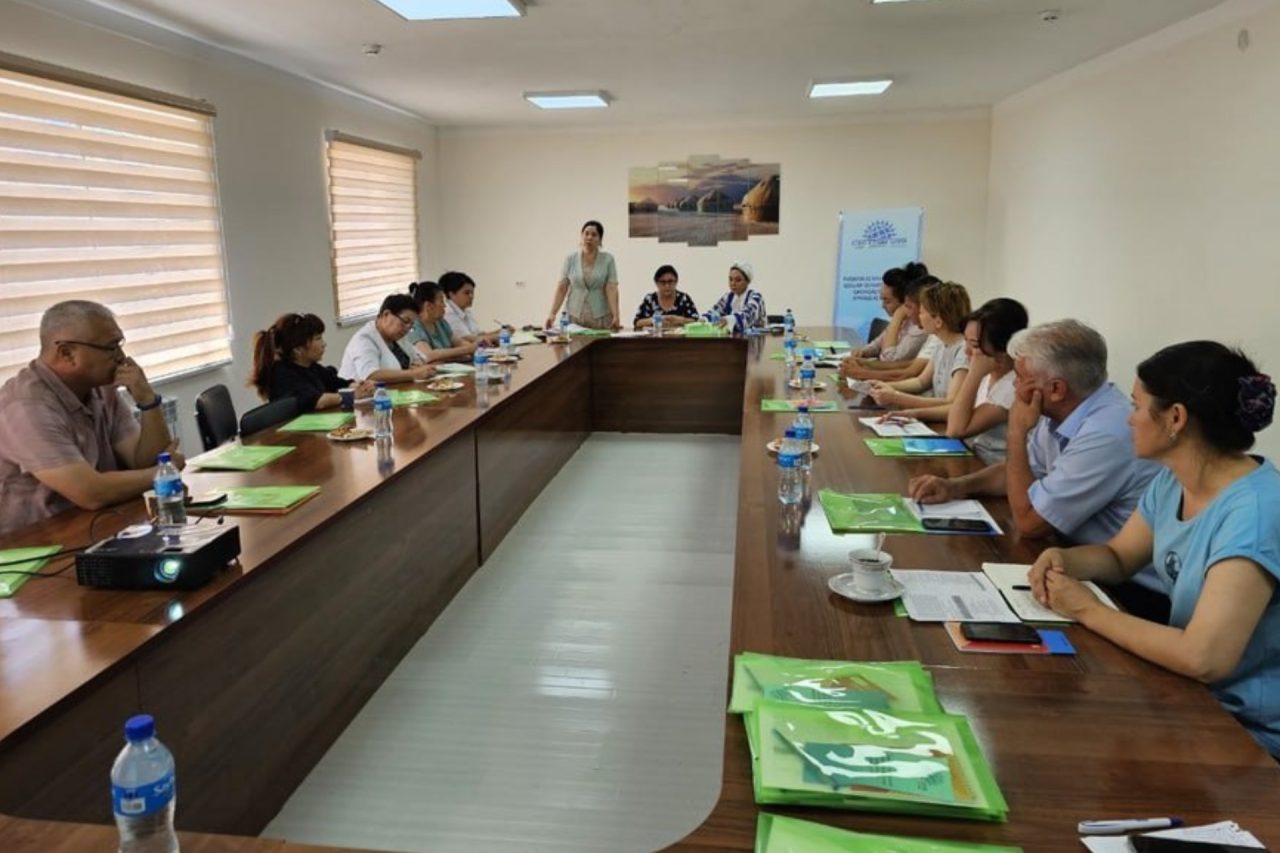
To present the research findings, raise public awareness, and develop practical recommendations, two roundtable discussions were organized in June 2023 in Nukus and Jizzakh.
Roundtable Discussion in Nukus
The event took place on 9 June 2023 at the House of Friendship in Nukus. It brought together 25 representatives of government institutions and non-governmental organizations.
Participants included representatives of the Commission on Gender Equality of the Jokargy Kenes, the Women's Committee, the Prosecutor's Office of the Republic of Karakalpakstan, the Society of Persons with Disabilities, the Ecological Party, NGOs, and the media.
Nargis Kosimova, Head of the Public Association "Ekolog", presented the research findings and spoke about the environmental and social consequences of climate change in Uzbekistan. She emphasized the importance of studying the relationship between environmental challenges and gender-based violence.
During the discussion, participants stressed the need for a comprehensive approach to addressing domestic violence that takes environmental factors into account.
Particular attention was given to improving access to drinking water, strengthening environmental awareness, involving men in addressing environmental and family-related challenges, and producing social awareness videos and information materials.
Roundtable Discussion in Jizzakh
The second roundtable discussion was held on 13 June 2023 at the House of NGOs in Jizzakh. A total of 22 representatives participated, including officials from the regional administration, the Women's Committee, the Association of Persons with Disabilities, law enforcement agencies, the Prosecutor's Office, political parties, NGOs, and the media.
Nargis Kosimova, Head of the Public Association "Ekolog", presented the results of the survey conducted among 170 women and girls in Jizzakh Region, including 36 women with disabilities.
Participants discussed the impact of soil salinization, water shortages, air pollution, and tree cutting on the socioeconomic situation of families and the everyday lives of women.
During the discussion, representatives of government institutions and civil society organizations emphasized the importance of incorporating environmental factors into programmes aimed at preventing domestic violence and supporting women.
At the end of the event, participants developed recommendations focusing on improving legal awareness, strengthening environmental education, expanding social protection for women, and improving environmental infrastructure.
Recommendations Developed During the Roundtable Discussions
Representatives of government institutions, NGOs, law enforcement agencies, organizations of persons with disabilities, and the media proposed a number of measures to prevent gender-based violence while taking environmental factors into account.
The key recommendations included:
Organizing awareness-raising meetings in mahallas to explain the relationship between environmental problems and domestic violence, actively involving men in these discussions.
Conducting training sessions for journalists and bloggers on climate change, environmental issues, and gender-based violence.
Strengthening the knowledge and professional capacities of representatives of government and non-governmental organizations, including law enforcement officers, on environmental gender issues.
Producing television and radio programmes, social videos, and information materials addressing the issue.
Incorporating environmental awareness, gender equality, and violence prevention into school curricula and other educational programmes.
Implementing family-based environmental initiatives promoting water conservation, tree planting, and environmental protection.
Improving access to safe drinking water, developing water supply infrastructure, and installing water purification systems.
Expanding social protection, vocational training, and legal counselling programmes for women, particularly women with disabilities.
Organizing preventive medical examinations to assess the impact of environmental factors on the health of women and girls.
Strengthening cooperation between government institutions, law enforcement agencies, and civil society organizations in preventing domestic violence.
Conducting broader studies involving both women and men across all regions of Uzbekistan to identify the causes and contributing factors of domestic violence.
Taking environmental factors into consideration when developing national programmes on gender equality and social protection.
Practical Significance and Project Results
The project helped draw attention to environmental problems not only as issues of nature conservation and sustainable natural resource management but also as important factors affecting social security, gender equality, and family well-being.
The research generated quantitative and qualitative data on how women perceive the impact of climate change and environmental challenges on family relationships.
The main achievements of the project included:
Conducting surveys among 293 women and girls in two regions of Uzbekistan.
Involving 85 women with disabilities in the research.
Identifying that 72% of respondents in Karakalpakstan and 87% in Jizzakh Region believed that environmental problems and climate change affect domestic violence.
Organizing two roundtable discussions in Nukus and Jizzakh, attended by 47 representatives of government institutions, NGOs, law enforcement agencies, civil society organizations, and the media.
Developing recommendations to prevent gender-based violence while considering environmental factors.
Preparing an official letter to the Commission on Gender Equality of the Republic of Uzbekistan, incorporating recommendations developed by participants of the roundtable discussions.
One of the significant outcomes was the establishment of a platform for cooperation between environmental organizations, gender equality institutions, organizations of persons with disabilities, law enforcement agencies, and media representatives.
Following the surveys and roundtable discussions, a letter was prepared and addressed to T. Narbayeva, Chairperson of the Commission on Gender Equality of the Republic of Uzbekistan. The letter included recommendations developed by participants of the two regional discussions.
Conclusion
Climate change is not the sole cause of domestic violence. However, environmental crises, water scarcity, economic hardship, deteriorating health conditions, and existing gender inequalities can interact and increase the risks of violence within families.
The research conducted in the Republic of Karakalpakstan and Jizzakh Region demonstrated the need for a deeper examination of this issue and for comprehensive measures that integrate environmental, social, and gender policies.
Particular attention should be paid to women living in rural communities, women with disabilities, and women from socially vulnerable households.
Climate adaptation should involve more than water conservation, tree planting, and the development of environmental infrastructure. It should also promote equal rights and opportunities for women and men, strengthen women's economic independence, ensure a fairer distribution of household responsibilities, and improve social protection mechanisms.
Environmental security is not only about protecting nature. It is also about protecting human dignity, family well-being, health, and the rights of every individual. A healthy environment, safe families, and gender equality are interconnected foundations of sustainable development.
Nargis Kosimova