

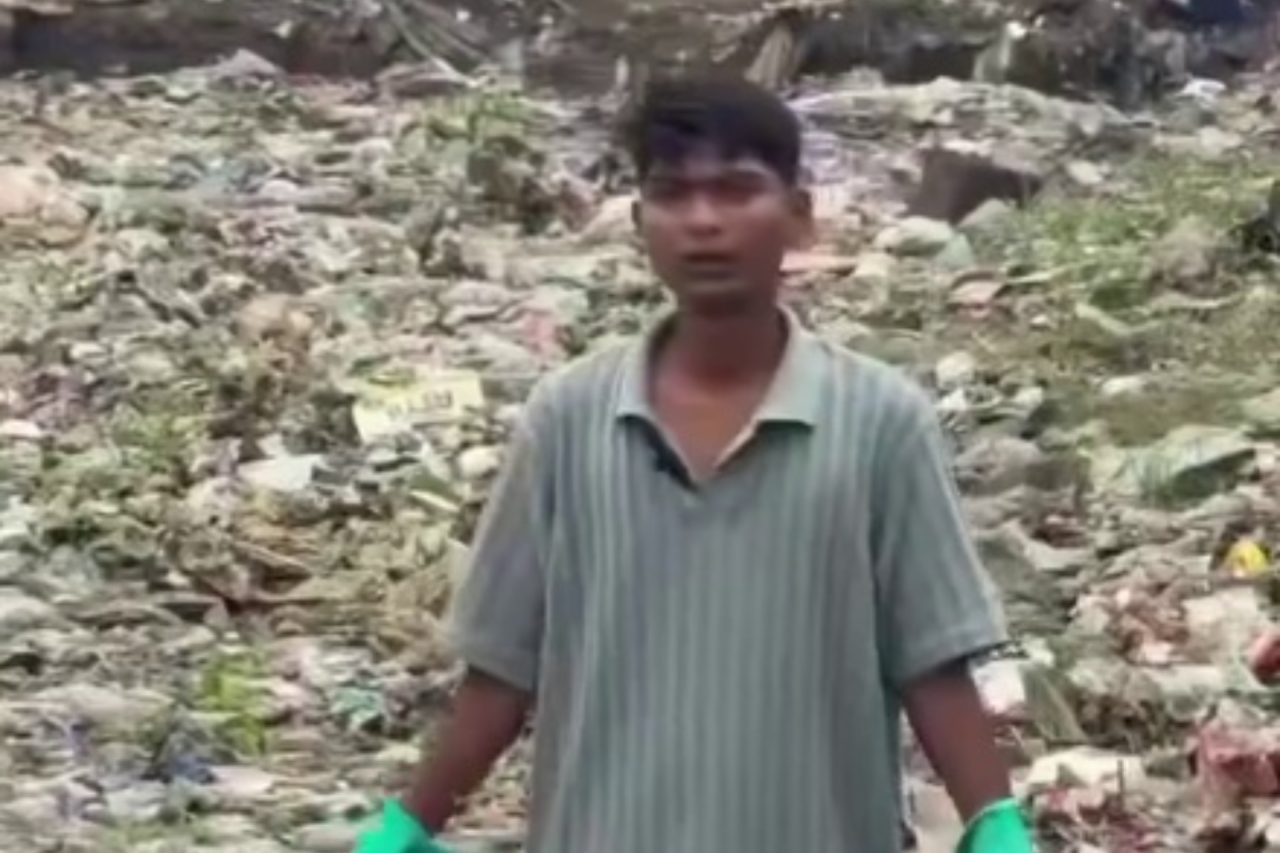
He removed plastic bottles, polythene bags, invasive weeds, sludge, and other debris from the river without the use of heavy machinery, often relying solely on his hands. According to reports, he began this effort on January 26, 2026. Initially, several friends joined him, but they later left the project, and Bittu continued the work on his own. Some sources state that the cleanup lasted for several months, while others report that it continued for as long as seven months.
Bittu regularly documented his work on social media. Videos of the cleanup process and “before-and-after” images spread widely online, attracting significant attention across India. His initiative received praise from industrialist Anand Mahindra and other prominent figures. Later, Madhya Pradesh Chief Minister Mohan Yadav met with Bittu and publicly recognized his efforts.
Perhaps the most remarkable aspect of the story is that the initiative gained attention not only in India but also internationally. Reports emerged suggesting that Boyan Slat, founder and CEO of The Ocean Cleanup, had offered Bittu a job opportunity.
However, there is another side to the story. Some local residents and representatives of the “Ajnar Bachao” (Save Ajnar) committee questioned certain claims about the extent of the river’s restoration. According to them, piles of waste can still be found along parts of the riverbank, and seasonal flooding may have played an important role in clearing sections of the river. For this reason, claims that he “single-handedly cleaned the entire river” should be treated with caution.
Nevertheless, Bittu’s initiative has brought an important question into the spotlight: Why does it often take an ordinary citizen’s personal initiative to address problems related to public infrastructure and environmental protection?
This story demonstrates that waste management is not solely the responsibility of government agencies or municipal services. Citizens’ environmental responsibility also plays a crucial role. At the same time, individual efforts cannot replace systematic waste management, regular cleanup operations, wastewater control, and long-term measures aimed at preventing pollution in the first place.