

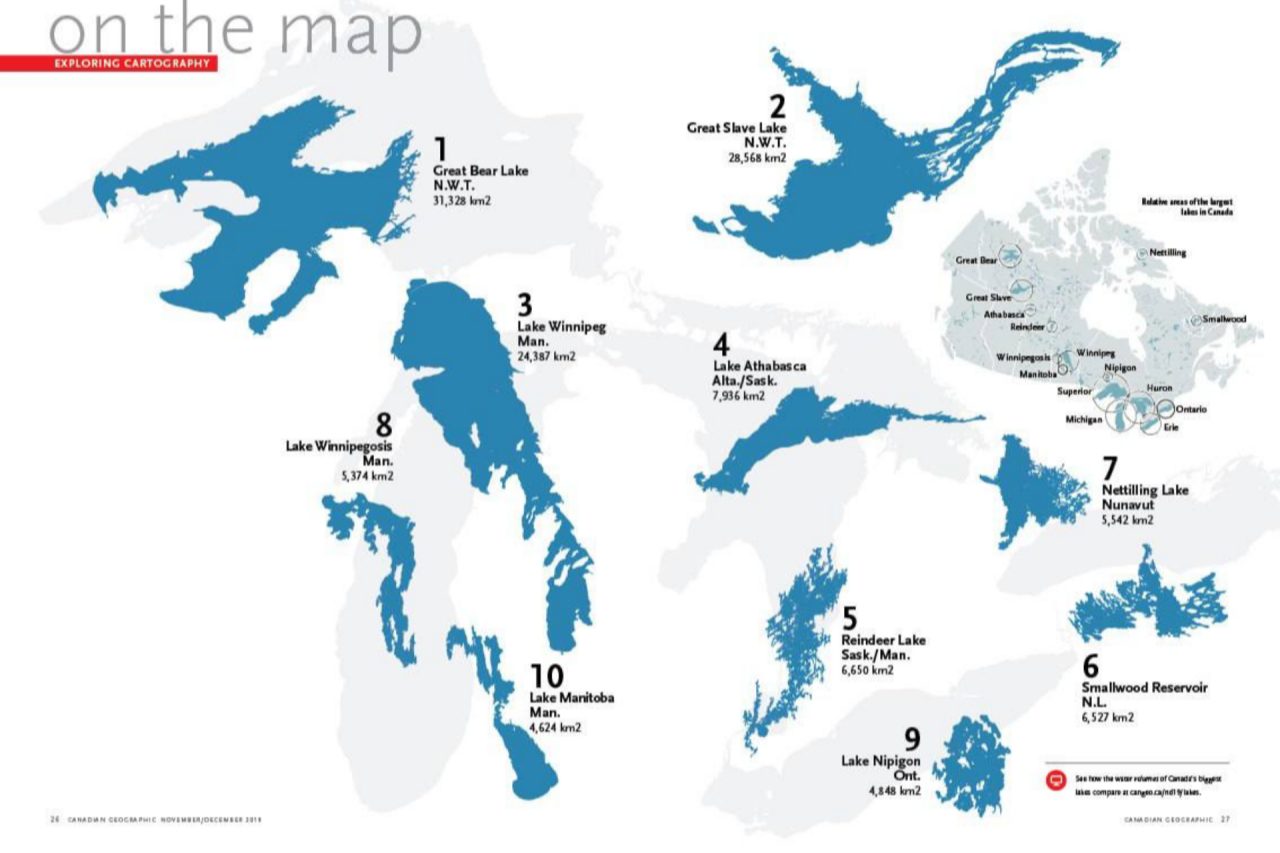
According to the Government of Canada, approximately 9% of the country’s territory is covered by freshwater. Canada also possesses substantial renewable freshwater resources. Its lakes, rivers, and other water bodies play an important role in shaping the country’s landscapes and maintaining ecological balance.
How Many Lakes Are There in Canada?
The exact number of lakes in Canada depends on the criteria used to count them. According to one widely cited estimate, the country has approximately 879,000 lakes larger than 0.1 square kilometres. This figure highlights Canada’s exceptional abundance of inland water bodies.
When smaller lakes and ponds are included, the total reaches millions. Some sources estimate that Canada contains approximately 60% of the world’s lakes. However, this percentage depends on the definition of a lake and the methodology used, rather than representing a universally agreed global count.
How Were Canada’s Lakes Formed?
Most of Canada’s lakes were formed by glaciers during successive ice ages. Approximately 10,000–20,000 years ago, enormous ice sheets covered vast areas of North America. As these glaciers moved, they eroded the land, carved depressions into the landscape, and reshaped the terrain.
When the climate warmed and the glaciers retreated, many of these depressions filled with water. This process created thousands of lakes that remain an essential feature of Canada’s landscape today.
Other lakes formed through river activity, tectonic processes, and different geological events.
Glacial lakes are particularly abundant across the Canadian Shield, an extensive geological region covering large parts of central and eastern Canada. The region’s rocky terrain and glacially carved depressions provide ideal conditions for the formation of numerous lakes.
Some of Canada’s Largest Lakes
Canada is home to several of the largest freshwater lakes in the world. Some cover tens of thousands of square kilometres.
| Lake | Approximate surface area |
|---|---|
| Lake Superior | 82,100–83,300 km² |
| Lake Huron | 59,500–59,800 km² |
| Great Bear Lake | 30,200–31,792 km² |
| Great Slave Lake | 27,000–28,570 km² |
| Lake Winnipeg | 24,387–24,600 km² |
Note: Surface-area figures vary between sources and measurement methods. Lake Superior and Lake Huron are shared by Canada and the United States.
Lake Superior is the world’s largest freshwater lake by surface area. It forms part of the Great Lakes system of North America, which is important for drinking water, shipping, fisheries, tourism, and regional economies.
Great Bear Lake and Great Slave Lake are located in Canada’s Northwest Territories. Both are among the country’s largest lakes and are surrounded by landscapes characterised by cold climates and extensive wilderness.
Lake Winnipeg, located in the province of Manitoba, is another major freshwater body that supports local communities, fisheries, and surrounding ecosystems.
How Much of the World’s Freshwater Does Canada Have?
Canada holds a substantial share of the world’s freshwater resources. Some estimates suggest that approximately 20% of the world’s surface freshwater is found in Canada’s lakes, rivers, and wetlands.
However, these water resources are not evenly distributed across the country. Approximately 60% of Canada’s river and stream flow drains northward, while around 85% of its population lives within 300 kilometres of the United States border.
This geographical imbalance means that a significant proportion of Canada’s water resources is located far from its most densely populated areas. Consequently, having an abundance of lakes does not eliminate the need for effective water management and reliable water-supply infrastructure.
The Ecological Importance of Canada’s Lakes
Canada’s lakes provide habitats for numerous species of fish, waterbirds, aquatic plants, and other wildlife. Their surrounding forests, wetlands, and shorelines support biodiversity and help regulate local water systems.
Lakes also contribute to the country’s economy. They supply water for communities, agriculture, and industry while supporting commercial and recreational fishing. Many attract tourists who enjoy boating, swimming, camping, and other outdoor activities.
Despite their abundance, Canada’s lakes face environmental pressures. Industrial and domestic pollution, agricultural runoff, and climate change can affect water quality and aquatic ecosystems.
Rising water temperatures, changes in seasonal ice cover, and the spread of pollutants may threaten some lake environments. Monitoring water quality, protecting surrounding habitats, and managing freshwater resources sustainably are therefore important environmental priorities.
Canada’s extraordinary number of lakes reflects its geological history and natural diversity. With hundreds of thousands of lakes exceeding a defined size threshold and millions of smaller water bodies, the country is one of the world’s most remarkable regions in terms of freshwater landscapes and natural resources.