

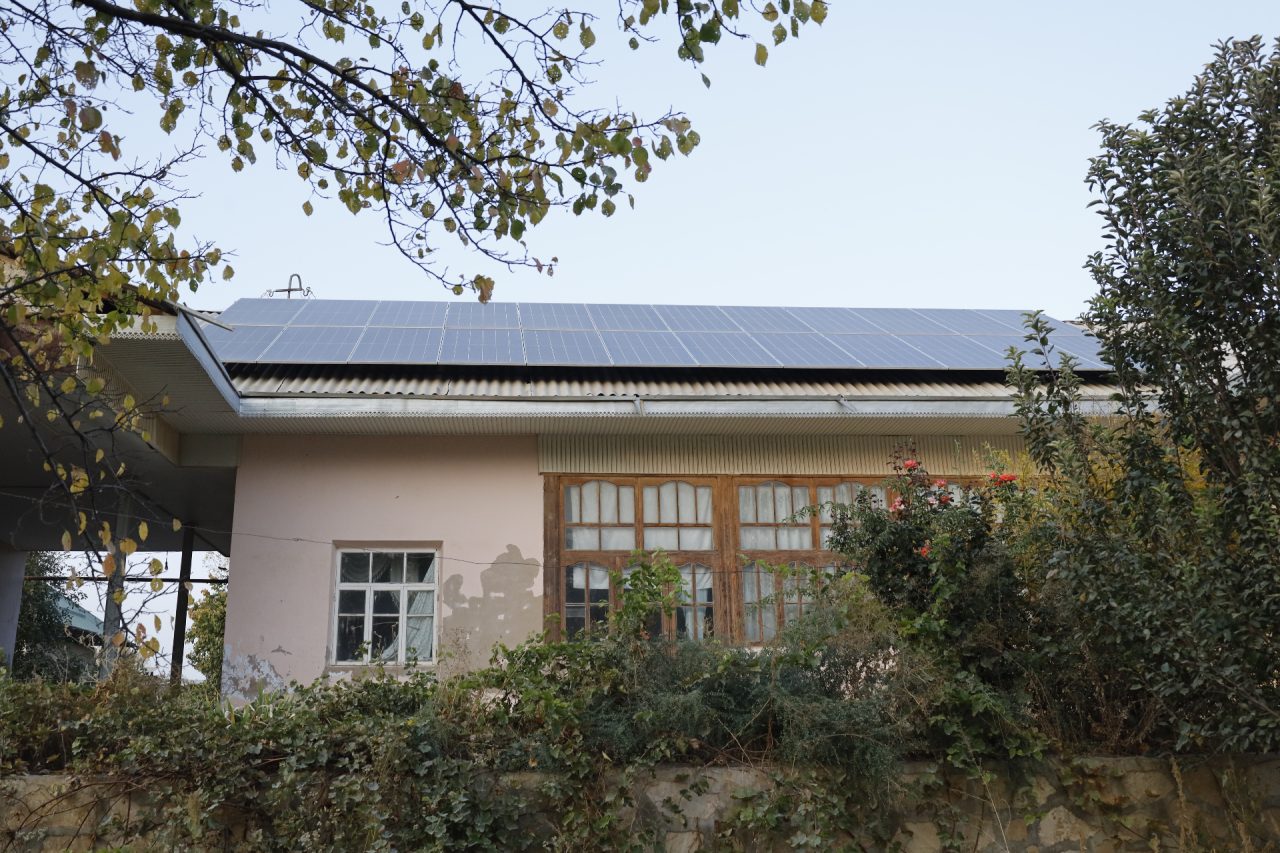
The rapid development of solar energy in Uzbekistan is one of the country's important steps towards transitioning to a green economy. The abundance of sunny days, the country's natural potential and growing energy demand create significant opportunities for developing this sector. However, access to solar panel installation is not equally available to everyone. For higher-income households, it may represent a long-term investment, while for low- and middle-income families, it can become a significant financial burden. Therefore, the transition to green energy is not merely a technological transformation. Above all, it is a matter of climate justice and social equality.
In recent years, rising global temperatures, water scarcity, droughts and extreme weather events have also had a significant impact on Central Asian countries. Uzbekistan is among the regions particularly vulnerable to the adverse effects of climate change. Increasingly intense summer heat is driving up electricity demand, while declining water resources and desertification are placing additional pressure on various sectors of the economy. Under these circumstances, diversifying the energy system, reducing dependence on fossil fuels and expanding the use of renewable energy sources are becoming strategically important. Solar energy is one of the promising ways to mitigate these challenges.
Solar panels generate electricity without directly burning fuel. Consequently, reducing the amount of electricity produced from natural gas and coal helps lower greenhouse gas emissions into the atmosphere. According to energy expert Temur Ahmedov, every kilowatt-hour of solar electricity generated in Uzbekistan prevents approximately 400 grams of CO₂ emissions on average. He notes that the environmental benefits of solar energy go beyond the absence of fuel combustion at power plants. The environmental impact of extracting, processing and transporting fossil fuels is also reduced.
The expert also highlights two main applications of solar energy: generating electricity through photovoltaic panels and producing heat using solar collectors. In particular, solar thermal systems can be an effective way to reduce energy consumption for heating water and buildings.
However, environmental benefits alone are not enough to ensure the widespread adoption of this technology. Its economic accessibility for households is equally crucial.
Why Is Green Energy Not Affordable for Everyone?
The cost of solar panels has decreased significantly in recent years. According to Temur Ahmedov, the price of solar energy systems in Uzbekistan has fallen by more than 60 per cent over the past five years. Globally, the cost of solar energy technologies has decreased almost tenfold since 2005.
Nevertheless, a reduction in technology costs does not necessarily mean that solar energy has become affordable for every household. According to approximate estimates based on market offers in 2026, installing a basic 3 kW solar power system may cost between 12 and 16 million soums, while a hybrid system with battery storage may cost around 20–26 million soums. A 5 kW system may cost between 18 and 25 million soums, while a version equipped with batteries can reach 30–42 million soums.
Naturally, these prices vary depending on equipment quality, the inverter, batteries, installation costs and technical requirements. However, one fact remains clear: for many families, such expenses represent a substantial portion of their household budget.
This is particularly challenging for families whose children study at universities on a tuition-fee basis and who spend a significant share of their income on food, education, utilities and everyday necessities.
The experience of Malika Akmalova, who lives in Jizzakh Region, illustrates this situation. She has three children. Two of them are studying at higher education institutions on a tuition-fee basis, while the youngest attends school. The family's total monthly income is approximately 12 million soums.
"I have thought about installing solar panels several times. I understand their environmental benefits very well. However, when I calculate the cost of the panels, I realise that my family's financial situation does not allow us to afford them. We spend at least six million soums a month on our children's education, extracurricular activities and daily needs. We also have other expenses to cover with the remaining money. I would also like to reduce our electricity costs and use clean energy. But solar panels need to become affordable for ordinary families as well," says Malika Akmalova.
This example illustrates not only the financial difficulties faced by one family but also the social inequalities surrounding the transition to green energy. Access to solar panels largely depends on household income and the ability to obtain credit. The situation is even more complicated for families without a stable income. People who earn their living through daily labour are often reluctant to take on long-term credit obligations. Their immediate priority is not purchasing solar panels but meeting their family's everyday needs. Therefore, policies aimed at promoting green technologies should not rely solely on those segments of the population that can afford to purchase them.
Solar Panels: Cost Savings or a Long-Term Financial Commitment?
When discussing the economic efficiency of solar energy, reduced electricity bills and the payback period of the system are often presented as the main arguments. According to Temur Ahmedov, a properly designed solar system that is not equipped with excessive capacity can pay for itself within five to six years. However, this requires an initial assessment of household energy consumption and improvements in energy efficiency.
For example, heat or cold escaping through windows, worn refrigerator door seals and the use of inefficient household appliances can increase electricity consumption. If these issues are not addressed, a household may end up purchasing a solar system with a capacity greater than its actual needs. The expert notes that, in some cases, a 2.5–3 kW system may be sufficient to meet the electricity needs of an ordinary family with two or three children. However, this figure cannot be applied universally to all households, as electricity consumption, living conditions, the number of household appliances and energy-use habits differ.
Another important factor when assessing the economic efficiency of solar energy is the type of system installed. A standard grid-connected system and a hybrid system with battery storage do not have the same cost or capabilities. Batteries allow electricity to be stored, but they increase initial installation costs. Their service life and replacement expenses must also be taken into account. Therefore, before purchasing solar panels, households need to calculate their annual energy consumption, solar irradiation levels, the amount of surplus electricity that can be supplied to the grid, electricity tariffs, loan interest rates and maintenance costs.
Unfortunately, the market also offers low-quality equipment, and installation work is not always carried out to the required standards. Some consumers report that their panels generate less electricity than expected or that inverters and other components break down within a relatively short period. This means that alongside developing solar energy, it is also necessary to strengthen quality control in the market, protect consumer rights and improve the training of qualified specialists.
The "Solar Home" Programme: Opportunities and Existing Limitations
Uzbekistan has introduced several mechanisms to encourage households to use renewable energy sources. One of them is the "Solar Home" programme, which has been implemented since 1 April 2023. Under the programme, individuals receive a subsidy of 1,000 soums for every kilowatt-hour of surplus electricity generated by household solar panels and supplied to the national electricity grid.]
According to the Ministry of Energy, during January–September 2026, a total of more than 642.1 billion soums in subsidies was paid to 70,700 citizens for solar electricity supplied to the grid. This figure indicates growing public interest in small-scale solar energy projects.
However, the existence of a subsidy mechanism does not mean that every household can benefit from it. To sell surplus electricity, a household must first have the financial means to purchase and install a solar power system. This highlights an important responsibility for government policy: not only to encourage citizens who already generate solar electricity but also to create opportunities for families that cannot afford to purchase such systems.
Presidential Decree No. PF-258, dated 26 December 2025, provides for a separate support mechanism for households included in the "Family Receiving State Support" category, starting from 1 February 2026. Under this mechanism, households meeting the established requirements are eligible for subsidies of up to 100 times the Basic Calculation Amount (BCA) to install solar panels with a capacity of 7–10 kW.
This initiative is important in terms of involving socially vulnerable families in the transition to green energy. However, the practical effectiveness of such assistance depends on who can access it, how straightforward the application process is, whether subsidy allocation conditions are transparent and whether the equipment meets quality standards.
Another important consideration is that socially vulnerable households do not necessarily need solar systems with a capacity of 7–10 kW. It would be more appropriate to determine the amount of support and system capacity based on each family's actual energy needs. Otherwise, public funds may be used inefficiently, or households may face unnecessary technical and financial obligations.
International expert Temur Ahmedov also emphasises the importance of subsidy allocation mechanisms in developing solar energy.
In his opinion, programmes based on mandatory purchases of equipment from companies selected in advance by the government may restrict competition and lead to higher prices. The expert supports long-term financing, competitive market mechanisms and giving households the opportunity to choose systems according to their individual needs. From his perspective, rather than providing low-income families with one-time charitable assistance, it is more important to establish mechanisms that reduce their energy expenses and strengthen their economic independence.
Energy Poverty: An Overlooked Social Challenge
Discussions about the transition to green energy often focus on electricity generation volumes, the number of new power plants and the installed capacity of solar panels. However, another important indicator must also be considered when assessing the impact of energy policies on people's lives: energy poverty. Energy poverty refers to a household's inability to access sufficient and affordable electricity, heating and cooling services required for everyday life.
Being connected to the electricity grid does not necessarily mean having adequate access to energy. Some families are forced to limit their use of air conditioners, heating appliances and other essential equipment in order to reduce electricity bills. For households without a stable income, allocating money to solar panels is even more difficult.
One of the citizens we spoke to explained the situation as follows:
"I work as a driver. My monthly income is not fixed and mainly depends on how much I earn each day. Under my current circumstances, installing solar panels is not a realistic option for me. My children are still young, and I also need to spend money on their daily needs and upbringing. Therefore, I cannot currently afford the installation of solar panels," our interviewee says.
During extremely hot summer days, an air conditioner may be an ordinary household convenience for some families, while for others it represents an additional financial burden. This demonstrates that the ability to adapt to climate change also depends on people's economic circumstances. A report published by the United Nations Development Programme (UNDP) in December 2025 also analysed disparities between access to energy and the financial situation of households in Uzbekistan.
It noted that some families are unable to heat their homes adequately, while energy expenses account for a significant share of the household budget among low-income families.
Progress in the energy sector should therefore be assessed not only by how much electricity is generated but also by how affordable, reliable and accessible it is for the population.
Climate Justice and Gender Equality: Women Must Become Active Participants in the Green Transition
Climate change does not affect all segments of society equally. Low-income families, rural communities, women living alone and socially vulnerable households may face greater exposure to environmental risks. Disruptions in water supply, rising electricity prices, droughts and extreme heat increase the daily burden on those responsible for managing household affairs.
Women often have to shoulder an additional burden in these circumstances.
At the same time, women's participation in the transition to green energy requires greater attention. Women play a significant role in household energy consumption, managing utility expenses and planning everyday needs. However, in some households, their participation in financial decision-making — including obtaining loans, purchasing solar panels and introducing new technologies — may be limited. This situation highlights the need to strengthen the gender perspective in green energy policies.
Expert Nodira Alimova emphasises that it is wrong to view women merely as users of energy-efficient technologies. They should be equal participants in developing environmental initiatives, making local decisions, promoting green entrepreneurship and acquiring new professional skills in the renewable energy sector.
To achieve this, educational programmes on solar energy, energy efficiency and the green economy should be expanded for women. Preferential loans and grants should be made available to them, and women-led family businesses should receive greater support. Climate justice means not only the equal distribution of environmental risks but also equal access to opportunities to reduce them. In this regard, gender equality must become an integral part of policies aimed at transitioning to a green economy.
Public Awareness: Reliable Environmental Education, Not Advertising
The development of solar energy is also directly linked to public knowledge and understanding of these technologies. Although public interest in solar panels is growing, awareness levels remain uneven. Some citizens lack sufficient information about the capabilities of solar panels, installation procedures, economic efficiency, government incentives and subsidies.
Some do not know how to choose the appropriate system capacity, how much electricity it can generate, or what maintenance and repair costs involve. This is where environmental communication plays a particularly important role.
Simply telling people that they should install solar panels is not enough. They need objective information about the actual capabilities, advantages, limitations and potential risks of this technology. Promoting the real experiences of households that have installed solar panels, organising practical seminars in local communities, explaining technical issues in simple language and providing transparent information about subsidies and preferential loans are among the key priorities.
Women and young people, in particular, should receive training on alternative energy sources and be encouraged to participate in environmental projects. Environmental journalism and public relations also play an important role in this process. Mass media should not limit their coverage of solar energy to successful projects and positive statistics. Problems related to installation, low-quality equipment, credit obligations, barriers to accessing subsidies and the actual needs of households should also be brought into public discussion. Reliable information is one of the fundamental conditions for building environmental awareness.
Solar energy is important because it helps reduce greenhouse gas emissions. However, it would also be inaccurate to describe it as a technology with absolutely no environmental impact. The production, transportation and installation of solar panels require energy and natural resources. Their service life is limited, although most panels are designed to operate for 20–25 years or longer. Over time, their efficiency decreases and some components become unusable. This raises another important question for Uzbekistan: how will the thousands of solar panels being installed today be collected, recycled and disposed of in the future?
Many of the materials used in solar panels, including glass, aluminium and silicon, can be recycled. However, this requires specialised technologies, recycling facilities and safe collection systems.
For battery-powered systems, the collection and safe treatment of batteries at the end of their service life is also an urgent issue. Internationally, one mechanism used to address this challenge is Extended Producer Responsibility (EPR). Under this approach, companies that place products on the market also assume responsibility for their collection and recycling once their useful life has ended. Uzbekistan must also establish a system for managing technological waste alongside the development of solar energy.Otherwise, technologies currently viewed as solutions to environmental problems may create new waste management challenges in the future.
A Green Future: For Whom?
Solar energy offers significant opportunities for Uzbekistan. It can help reduce dependence on fossil fuels, lower greenhouse gas emissions, strengthen energy security and meet the population's electricity needs. However, the true effectiveness of this transition should not be measured solely by the number of solar power plants built, the number of installed panels or the volume of electricity generated. One of the most important criteria is how accessible these opportunities are to ordinary citizens.
To achieve this, several measures are necessary.
First, non-repayable subsidies and long-term preferential financing mechanisms for low-income families should be expanded. Support should be tailored to each household's actual needs and financial circumstances. Second, programmes aimed at improving residential energy efficiency should be developed alongside solar panel installation initiatives. Simply increasing electricity generation capacity without reducing energy waste may fail to deliver the expected economic benefits. Third, quality control in the solar energy market must be strengthened, consumer rights must be protected and qualified specialists must be trained. Fourth, environmental education and vocational training programmes for women, young people and rural communities should be expanded, while their participation in the green economy should be actively encouraged. Fifth, national infrastructure for collecting, recycling and safely disposing of solar panels and batteries should be developed without delay. Sixth, social indicators should be given greater priority when evaluating environmental policy outcomes. These indicators should include the number of low-income households that have gained access to renewable energy, reductions in household energy expenses, women's participation in decision-making and the reduction of energy poverty.
One of the greatest risks in today's transition to green energy is that environmentally friendly technologies may become accessible only to people with sufficient financial resources. In such circumstances, instead of eliminating existing social inequalities, the green economy may deepen them. Therefore, solar energy development policies must be based not only on economic efficiency but also on the principles of social justice.
After all, climate justice is not simply about protection from environmental risks; it is also about equal access to opportunities that help reduce those risks. For solar energy to truly become a source of a sustainable future, its benefits must be reflected not only in reduced greenhouse gas emissions but also in improved living standards for ordinary families, expanded economic opportunities for women and the protection of every citizen's right to a decent life. Because a green future can become genuine progress only when it is accessible not just to those who can afford to purchase solar panels, but to every member of society.
Davron Ergashev