

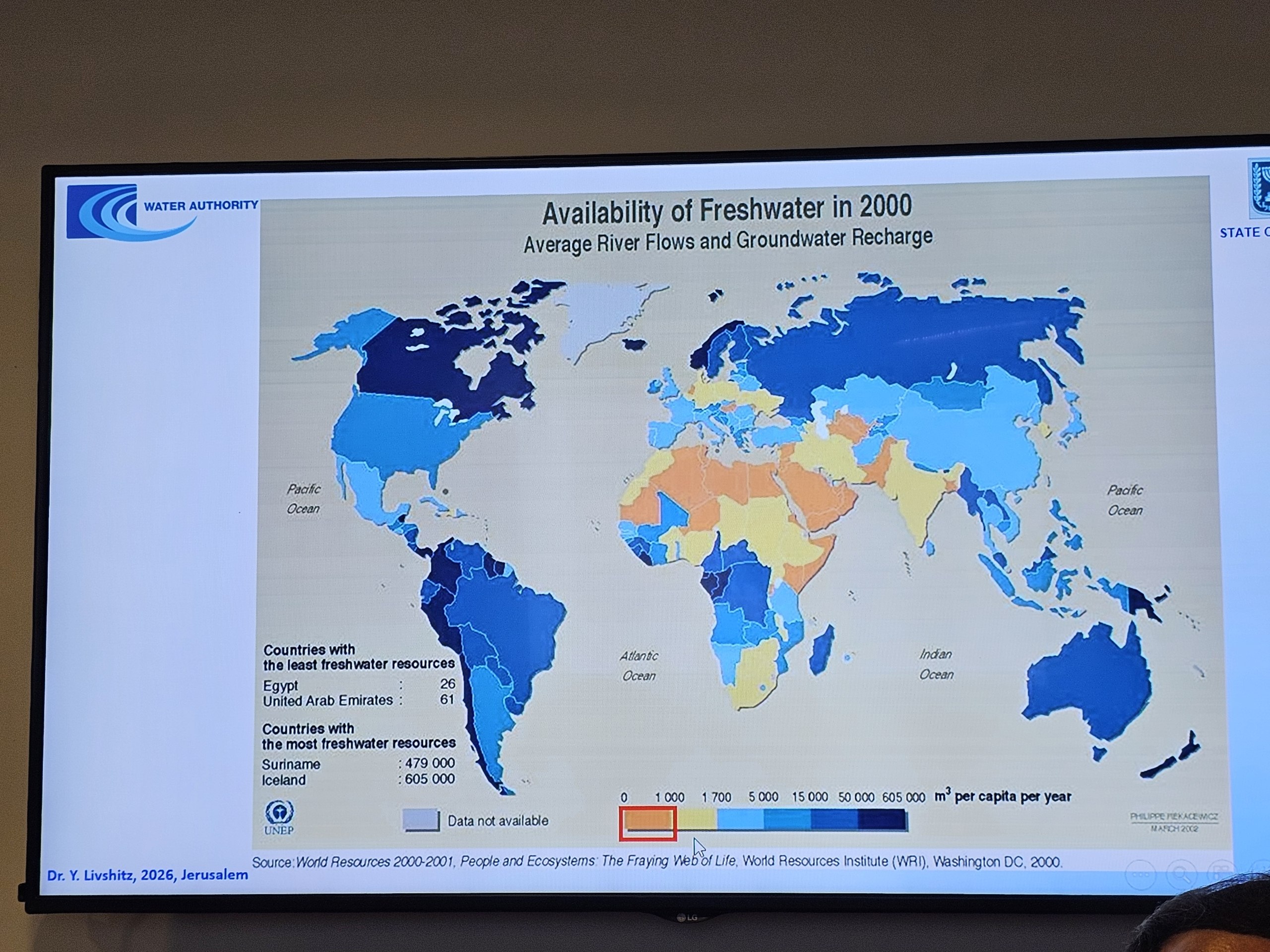
Today, water is becoming not only an environmental resource but also an economic, social, and strategic one. Factors such as climate change, shifting precipitation patterns, population growth, and rising agricultural water demand are compelling many countries worldwide to utilize existing water resources more efficiently. Particularly in arid regions, accounting for every drop of water, maintaining its quality, and ensuring its safe delivery to the consumer are becoming increasingly critical. In this context, Israel’s experience is of particular interest. As a country with limited natural freshwater resources, Israel has developed a sophisticated, multi-layered water management system over the years.
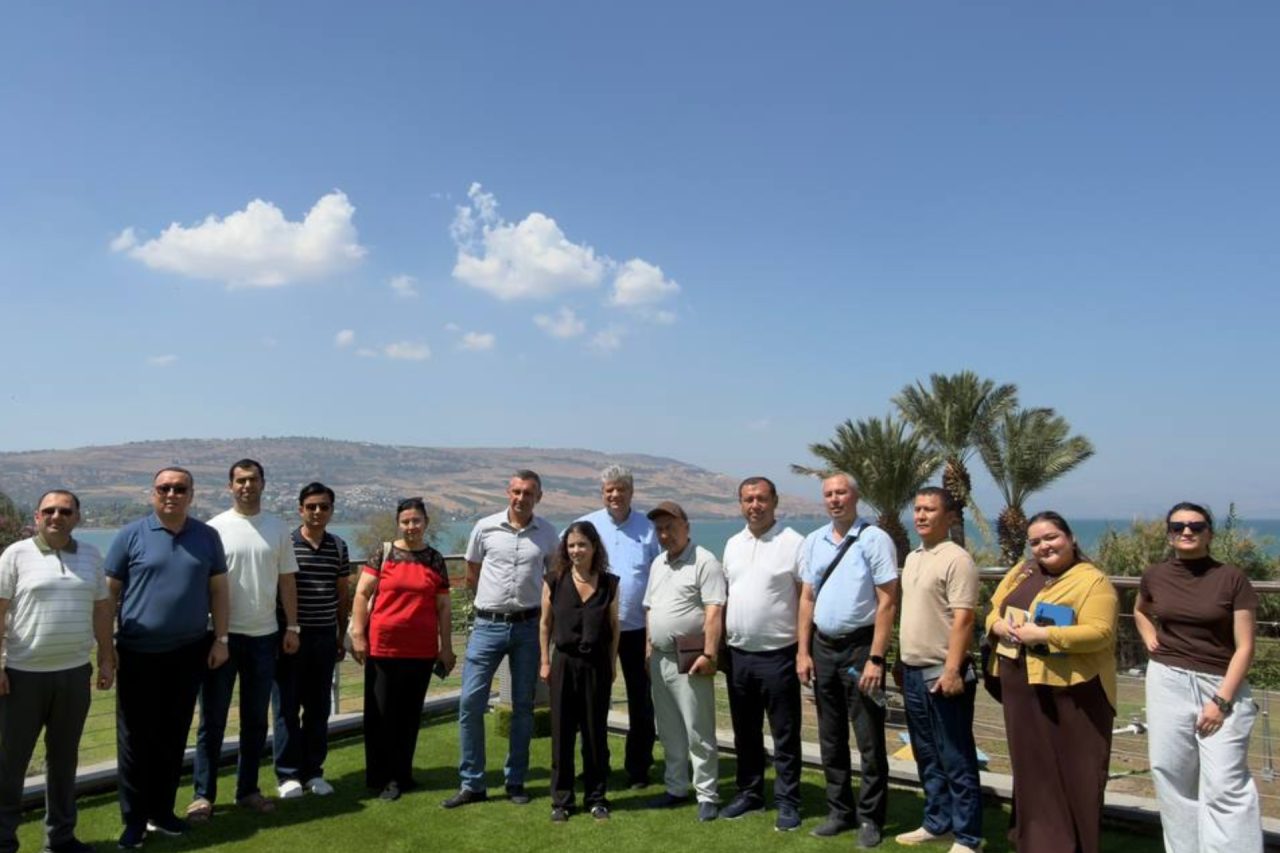
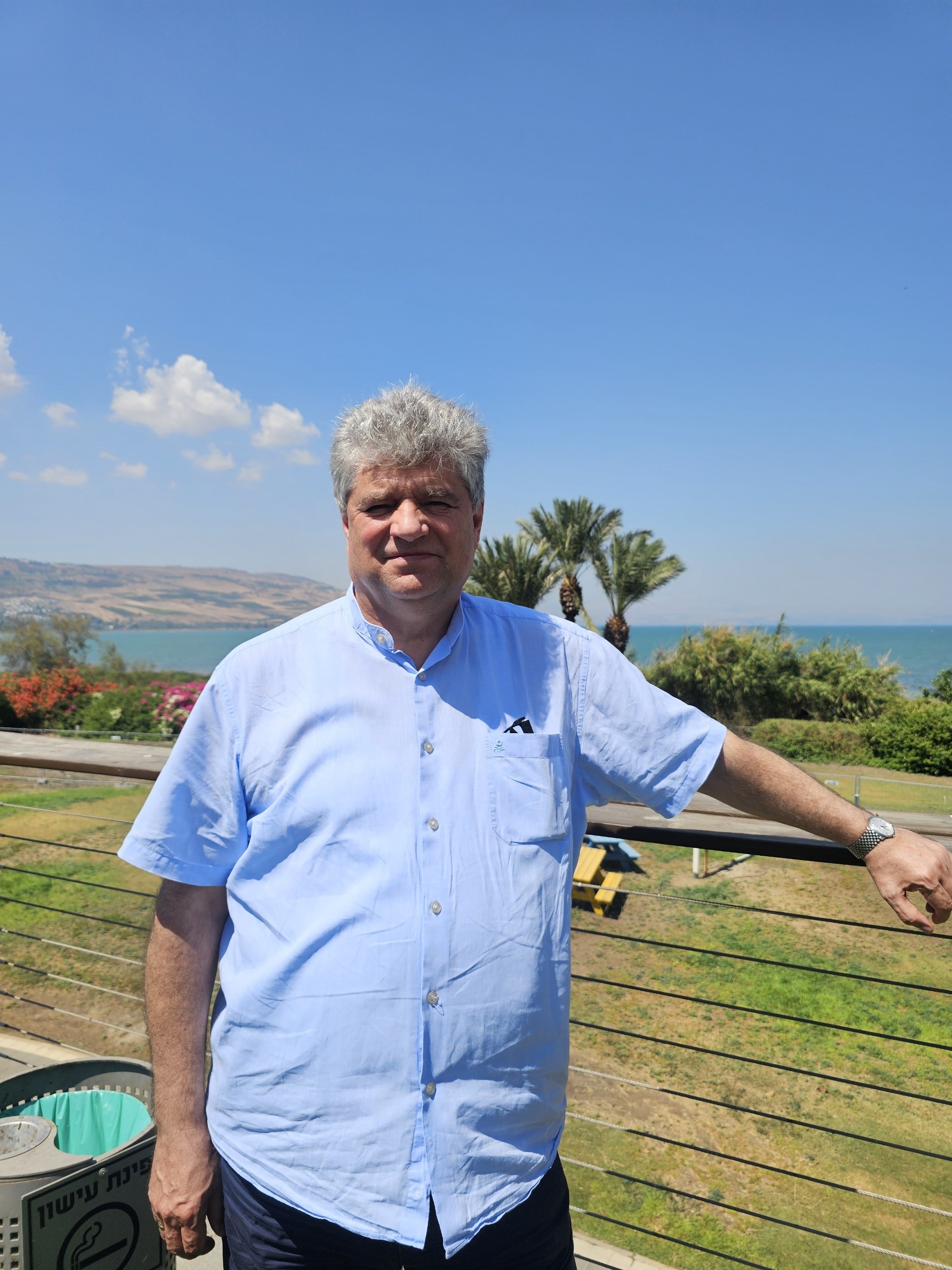
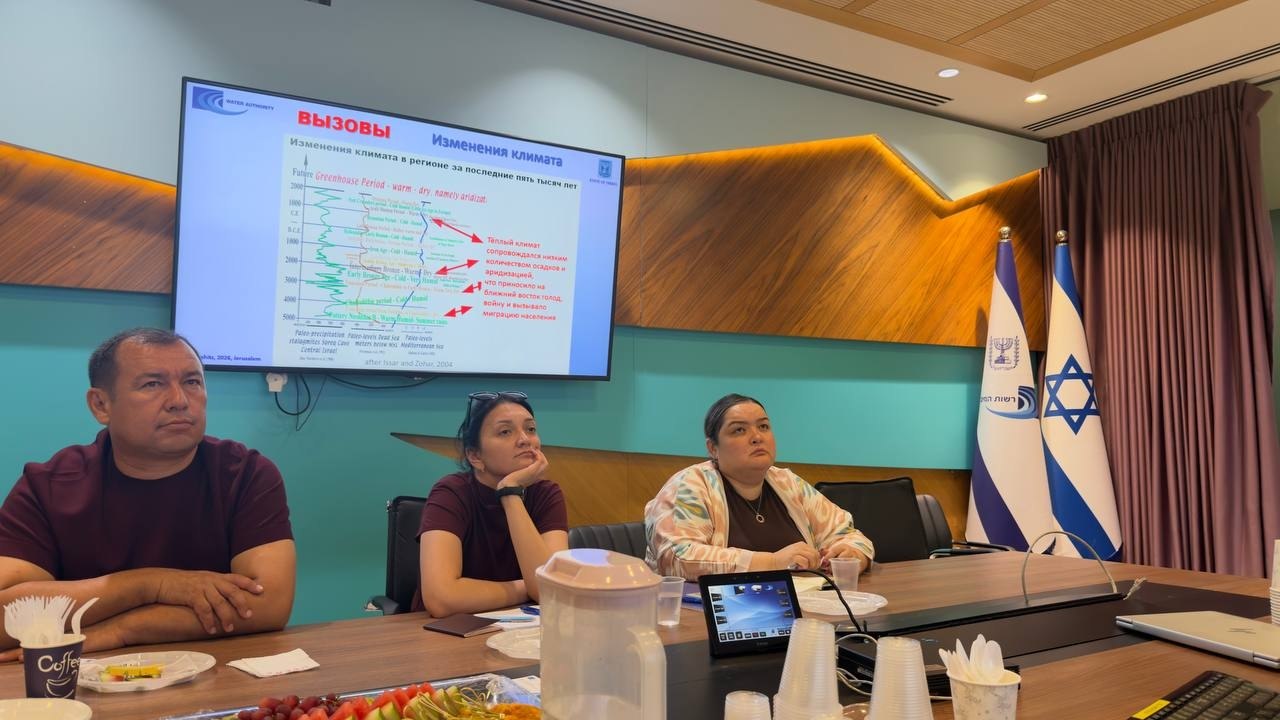 Today, the country’s experience is notable not merely for its water-saving technologies, but for the interconnected nature of various aspects—including water resource management, quality control, groundwater utilization, infrastructure security, and digital monitoring. A delegation visiting Israel to study the country's water management practices—an initiative of the Embassy of Uzbekistan in Israel—visited the Israel Hydrological Service to learn about the nation's water resource management and public water supply systems. Discussions during the visit covered water quality monitoring, laboratory operations, cooperation with the national water company Mekorot, the functions of local water utilities, groundwater utilization, and safety measures for internal building water systems. Insights provided by Yakov Livshits, Director of the Israel Hydrological Service, offered a clear understanding of key aspects of the country's water management system. In Israel, drinking water is not drawn from a single source; instead, it comes from a unified national system that integrates natural water sources, desalination, and water reuse. Where does the drinking water come from? Today, the primary sources are as follows: Desalinated seawater is a major source of fresh water.
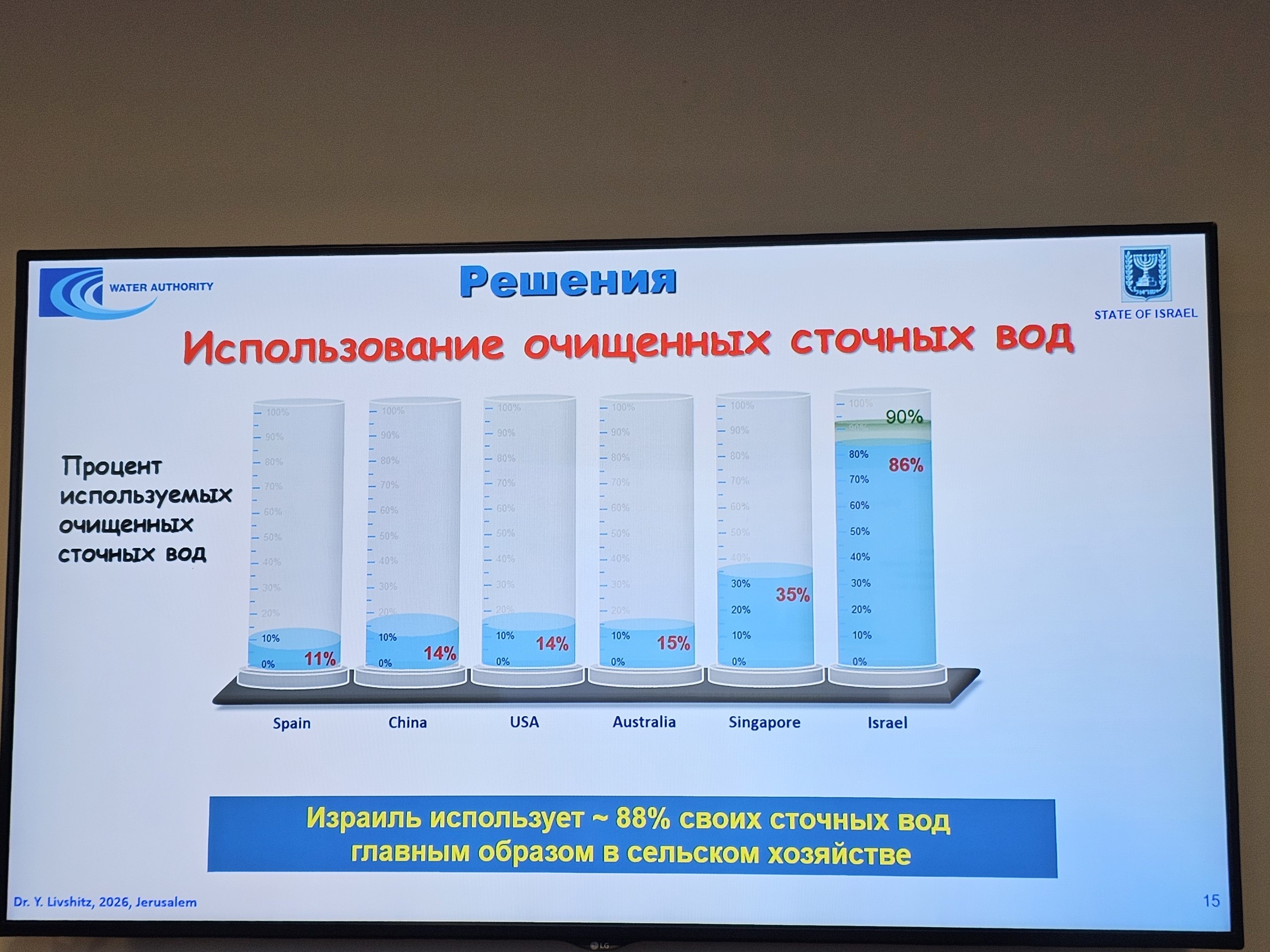 Seawater is treated at desalination plants using membrane technology—primarily reverse osmosis—after which it is stabilized and disinfected. Groundwater is extracted from wells and aquifers; its quality is monitored, and it undergoes additional treatment if necessary. Fresh surface water and natural sources play a much smaller role today than in the past, as Israel has significantly increased its production of desalinated water. Treated wastewater is a crucial component of Israel's water management system. However, a distinction is important: treated wastewater is used primarily for agriculture and purposes other than direct human consumption. The national system keeps drinking water separate from treated water intended for reuse. How does the water reach the tap? The simplified process looks like this: Sea/well/natural spring → treatment → quality control → reservoirs and storage tanks → main network → local water company → home → tap.
 In recent years, Uzbekistan has been rapidly implementing water-saving technologies. Technologies such as drip and sprinkler irrigation, discrete irrigation, and laser land leveling are becoming widespread.
 Vadim Sokolov, head of the International Fund for Saving the Aral Sea agency, notes that Uzbekistan is becoming one of the world's leading nations in the scale of water-saving technology adoption. However, in his view, this is not the final destination. The next step is not merely saving water, but managing it intelligently. Drip irrigation saves water, but "smart irrigation" offers even greater possibilities: soil moisture, air temperature, humidity, weather forecasts, and plant growth stages are monitored via sensors. Based on this data, the precise water volume and irrigation timing are determined. In other words, decisions are based on real data rather than the habit of simply irrigating every three days.
The experiences of Israel and India are evolving in this very direction. Modern systems allow for the control of not only water volume but also irrigation intensity. Managing water and fertilization processes within a single system enables more efficient resource utilization. The fundamental question changes as well; today, we ask: "How much water did we apply per hectare?" In the future, the question "How much yield did we obtain per cubic meter of water?" will become crucial.
Vadim Sokolov, head of the International Fund for Saving the Aral Sea agency, notes that Uzbekistan is becoming one of the world's leading nations in the scale of water-saving technology adoption. However, in his view, this is not the final destination. The next step is not merely saving water, but managing it intelligently. Drip irrigation saves water, but "smart irrigation" offers even greater possibilities: soil moisture, air temperature, humidity, weather forecasts, and plant growth stages are monitored via sensors. Based on this data, the precise water volume and irrigation timing are determined. In other words, decisions are based on real data rather than the habit of simply irrigating every three days.
The experiences of Israel and India are evolving in this very direction. Modern systems allow for the control of not only water volume but also irrigation intensity. Managing water and fertilization processes within a single system enables more efficient resource utilization. The fundamental question changes as well; today, we ask: "How much water did we apply per hectare?" In the future, the question "How much yield did we obtain per cubic meter of water?" will become crucial.
The process of digitalizing the water sector is currently underway in Uzbekistan. However, as Sokolov emphasizes, digitalization should not be limited merely to creating databases. Sensors collect data, satellites monitor fields, and software performs analysis—yet unless this information translates into management decisions, a true "smart water" system cannot be established. True digitalization is a chain connecting data to practical decision-making. Technology can be purchased, and sensors can be installed; however, without qualified specialists to manage them, even the most advanced system will fail to deliver the expected results.
Sokolov places special emphasis on the need to train modern engineers, irrigation specialists, and scientists for the water sector. A new generation of water specialists must be proficient not only in water distribution but also in sensors, digital technologies, satellite data, and automated control systems. Strengthening scientific and innovative centers—particularly in the Aral Sea region—testing smart irrigation technologies, and training local specialists are of great importance. Rising temperatures, increased evaporation, and changing precipitation patterns are imposing new demands on water management. The challenge goes beyond drought alone. At times, heavy rainfall occurring over a short period can lead to flooding and other issues. Therefore, future water policy must address two simultaneous tasks: conserving water during droughts and capturing and retaining it during periods of heavy precipitation. It is not necessary to replicate Israel’s experience exactly in Uzbekistan; the two countries differ in scale, climate, and agricultural systems. However, Israel’s approach—grounded in science, technology, and precise data—is crucial for Uzbekistan. We now require systems that go beyond simple drip irrigation to include technologies that "listen" to the soil, monitor plant health, account for weather conditions, and automate water management.
Water conservation is the task of today; smart water management is the strategy for tomorrow. The sooner Uzbekistan transitions to this stage, the better it will be able to safeguard its agricultural and environmental security amidst water scarcity and climate change. For Uzbekistan, water is not merely a natural resource; it is the foundation of agriculture, food security, the economy, and environmental stability. Given that approximately 98 percent of the country's agriculture relies on irrigation, the rational use of water becomes a vital national strategic priority. We now need systems that go beyond simple drip irrigation—systems capable of "listening" to the soil, monitoring plant health, factoring in weather conditions, and automatically managing water usage. Water conservation is the task of today; smart water management is the strategy for tomorrow. The sooner Uzbekistan transitions to this stage, the better it will be able to safeguard its agricultural and environmental security in the face of water scarcity and climate change.
Nargis Qosimova, Israel